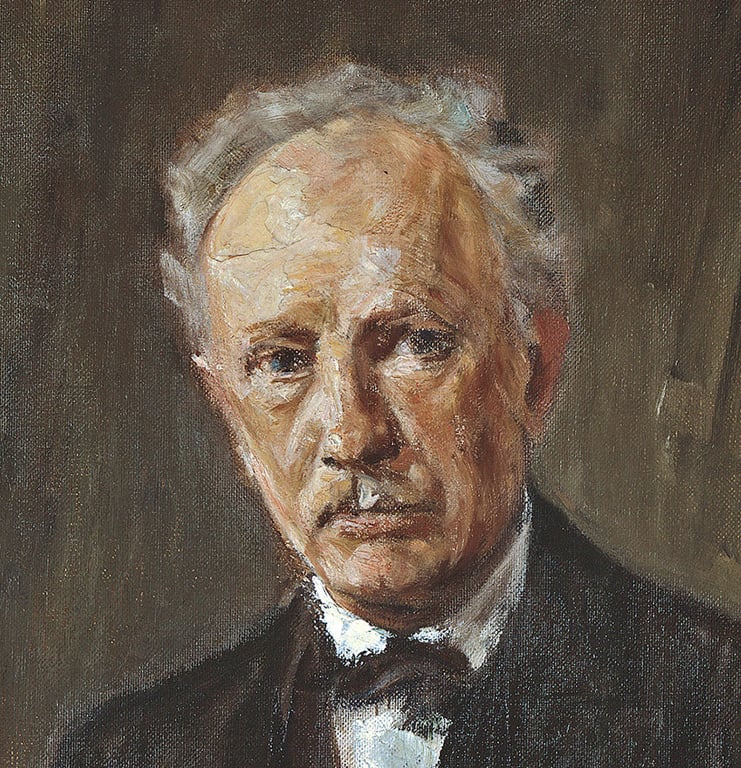
Richard Strauss was a German composer, conductor, and pianist who is considered one of the most important figures in the history of 20th-century classical music.
Born in Munich in 1864, Strauss was the son of Franz Strauss, who was a well-known horn player in the Munich Court Orchestra. Strauss showed an early talent for music and began composing at the age of six. He studied music theory and composition with leading figures such as Ludwig Thuille and Heinrich von Herzogenberg.
Strauss's early works were heavily influenced by the Romantic composers of the time, including Wagner and Liszt. He gained recognition for his tone poems, which were orchestral works that told a story or portrayed a scene. One of his most famous tone poems is "Also sprach Zarathustra," which was used in Stanley Kubrick's film "2001: A Space Odyssey."
In addition to his work as a composer, Strauss was also a conductor and pianist. He held several conducting positions throughout his career, including the Berlin State Opera and the Vienna State Opera. He was known for his interpretations of Wagner's operas, and he was also a champion of contemporary music.
Strauss's music fell out of favor with the rise of the Nazi regime in Germany, and he was briefly imprisoned in 1933 for his refusal to cooperate with the regime. However, he continued to compose throughout the 1930s and 1940s, including his final opera, "Capriccio," which premiered in 1942.
Richard Strauss died in Garmisch-Partenkirchen, Germany, in 1949.