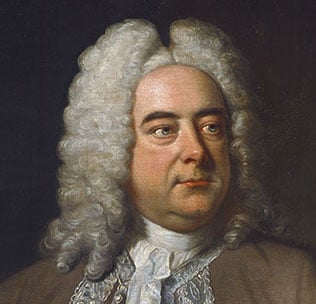
Georg Friedrich Händel was a German composer of the Baroque era, known for his instrumental music, operas, and oratorios.
Händel was born in Halle, Germany, on February 23, 1685, to a family of middle-class musicians. His father, Georg Händel, was a barber-surgeon who played the cello, and his mother, Dorothea Taust, was the daughter of a Lutheran pastor.
Händel showed an early aptitude for music, and his father encouraged him to pursue a career as a musician. He received his early musical education in Halle, where he studied under Friedrich Wilhelm Zachow, the town's organist. Zachow taught Händel composition, keyboard playing, and music theory, and his training laid the foundation for Händel's later success as a composer.
In 1703, at the age of 18, Händel moved to Hamburg, where he worked as a violinist and harpsichordist in the orchestra of the Hamburg Opera. It was during this time that he began composing operas, including his first opera, Almira, which premiered in Hamburg in 1705.
In 1706, Händel traveled to Italy, where he studied the works of Italian composers and was exposed to the Italian operatic style. While in Italy, he composed several operas and instrumental works, including the oratorio Il trionfo del tempo e del disinganno.
In 1710, Händel was appointed Kapellmeister to the Elector of Hanover, and he moved to London. In London, Händel became a leading figure in the city's musical scene, composing operas, oratorios, and instrumental works.
Some of Händel's most famous works include his Water Music and Music for the Royal Fireworks, which were composed for outdoor performances on the River Thames and in Green Park, respectively. He also composed operas, including Giulio Cesare and Rinaldo, and oratorios, including Messiah and Israel in Egypt.
Händel died in London on April 14, 1759, at the age of 74. He was buried in Westminster Abbey, and his funeral was attended by a large crowd of mourners, including many of the leading figures in London's musical world.