
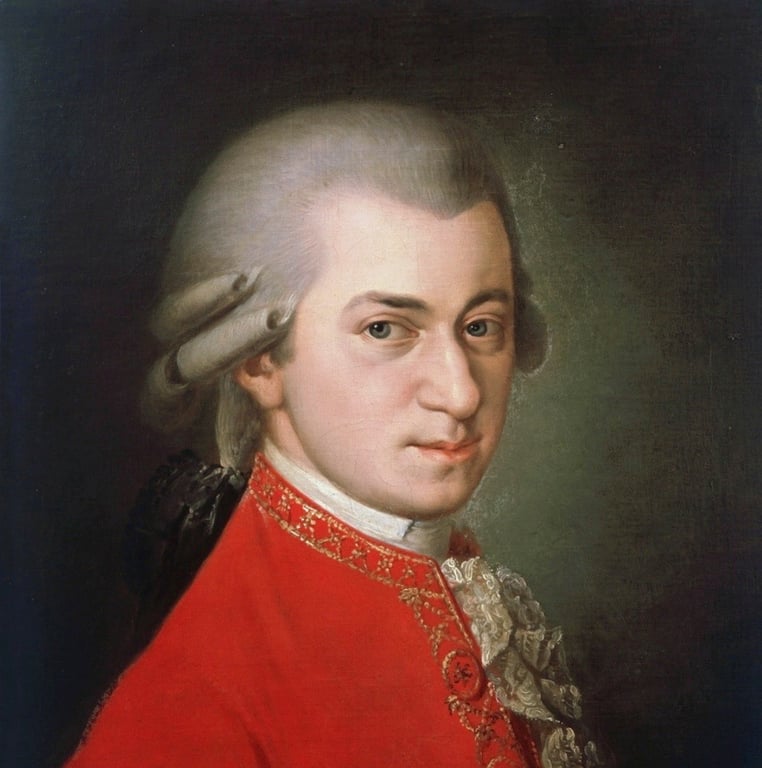
Wolfgang Amadeus Mozart, one of the most prolific and influential composers of the Classical era, was born in Salzburg, Austria in 1756. Mozart was a child prodigy with notable talent in music from a very young age. His father recognized his musical gifts and devoted himself to nurturing his talent, taking him on concert tours throughout Europe and introducing him to prominent musicians and aristocrats.
Mozart's early works were mostly keyboard pieces, sonatas, and symphonies, which he composed in the style of the Baroque period. However, he quickly developed his own unique style, characterized by its melodic richness, harmonic complexity, and emotional depth.
In his lifetime, Mozart composed over 600 works, including symphonies, concertos, chamber music, and church music. His output was prodigious and included some of the most famous and beloved pieces in the classical repertoire, such as his "Eine Kleine Nachtmusik," the "Jupiter Symphony," and the "Requiem."
Mozart achieved great success with his operas, including "The Marriage of Figaro," "Don Giovanni," and "The Magic Flute." These works were noted for their lyrical beauty, intricate vocal ensembles, and sophisticated orchestration.
Despite his success as a composer, Mozart struggled financially for much of his life, often in debt and forced to rely on patronage and commissions to support himself and his family. His health also suffered, and he died at the young age of 35, leaving behind a legacy as one of the greatest composers of all time.
Mozart's music strongly influenced Western classical music and inspired generations of composers, musicologists, and audiences alike. Today, his name is synonymous with musical genius and artistic excellence, and his music continues to be performed and loved by audiences around the world.