
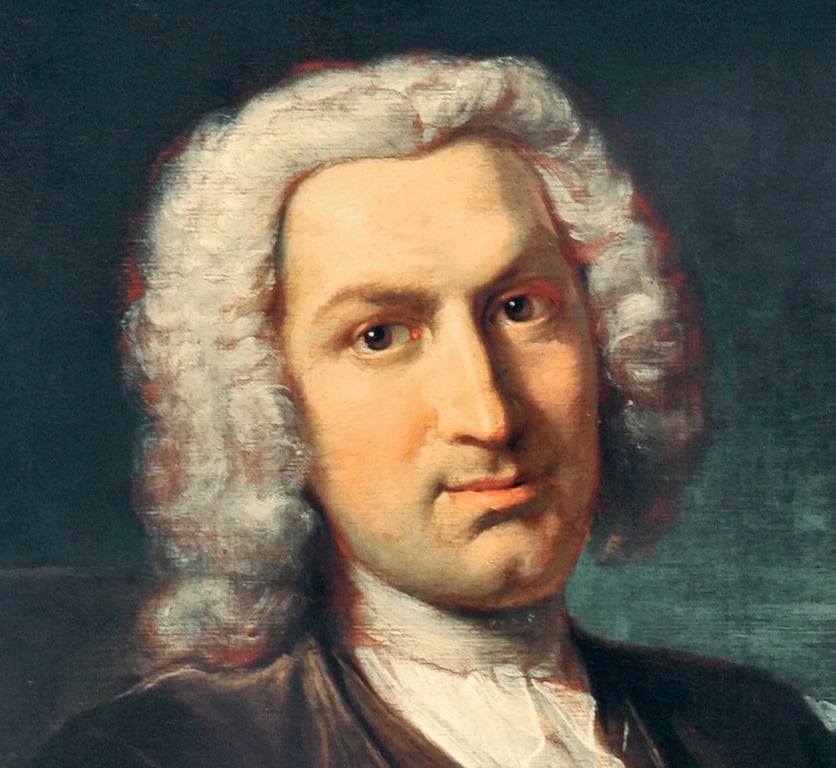
Albrecht von Haller was a Swiss anatomist, physiologist, botanist, and poet. He was born on October 16, 1708, in Bern, Switzerland, to a wealthy family of patricians.
Haller showed a keen interest in natural sciences from an early age and began studying medicine at the University of Tübingen in Germany when he was just fifteen years old. He later transferred to the University of Leyden in the Netherlands, where he earned his medical degree in 1727.
In 1736, Haller was appointed as a professor of anatomy and surgery at the University of Göttingen in Germany. He later became a professor of medicine and botany as well. Haller's research in physiology and anatomy was groundbreaking, and he made important contributions to the field of medicine. His most notable work was his Elementa Physiologiae Corporis Humani, which was published in 1757 and became a standard textbook on physiology for several decades.
Haller was also an accomplished botanist and published a four-volume work titled Historia Stirpium Indigenarum Helvetiae in 1768, which described the plants of Switzerland in great detail. He was a member of the Royal Society of London and was elected a foreign member of the Royal Swedish Academy of Sciences in 1747.
Apart from his scientific pursuits, Haller was also a prolific poet and wrote numerous works in both Latin and German. His poem "Die Alpen" is considered one of the greatest works of Swiss literature.
Haller died on December 12, 1777, in Bern, Switzerland, at the age of 69. His contributions to medicine and botany continue to be studied and appreciated to this day.