
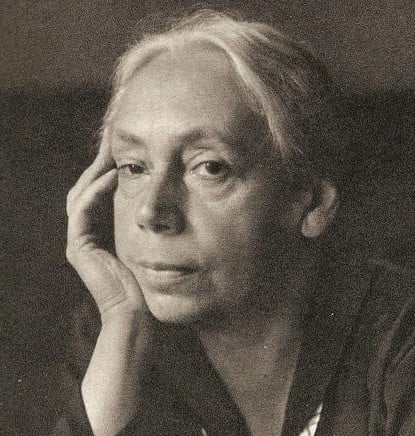
Käthe Kollwitz was a German artist, printmaker, and sculptor, known for her socially engaged art that depicted the struggles of the working class and the victims of war.
Kollwitz was born in Königsberg, East Prussia in 1867. She was the daughter of a social democrat, which strongly influenced her political views and her art. Kollwitz attended art schools in Berlin, first at the Women's Academy of Art, and then at the Academy of Art.
Throughout her career, Kollwitz was a strong advocate for social justice and used her art to bring attention to the plight of the working class. Her early work focused on the lives of women and children, and she often depicted the hardships they faced. In 1898, she created her first major print series, "A Weavers' Revolt," which depicted the 1844 revolt by Silesian weavers against their employers.
Kollwitz's most famous work is likely her "War" series, which she began in 1921. This series of prints and sculptures portrayed the suffering and loss caused by World War I, and the impact it had on civilians, especially women and children. One of the most famous pieces from the series is "The Grieving Parents," a sculpture of a mother and father mourning the loss of their son.
In addition to her socially engaged art, Kollwitz was also involved in left-wing politics and was a member of the Social Democratic Party of Germany. She was an outspoken critic of fascism and the rise of the Nazi Party in Germany, and her work was banned by the Nazis in 1933.
Kollwitz continued to create art throughout her life, and her work remains highly regarded today for its powerful social commentary and emotional depth. She died in 1945 in Moritzburg, near Dresden.