
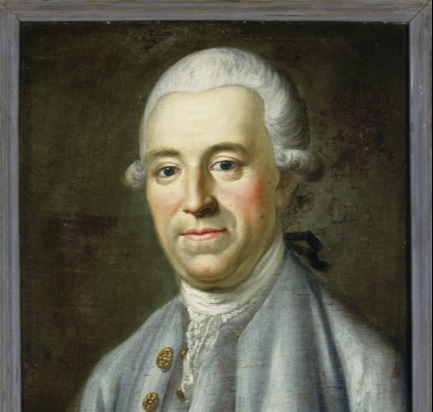
Justus Möser was a German lawyer, writer, and statesman known for his contributions to political theory and social reform. Born in Osnabrück, a city in the northwestern part of present-day Germany, he grew up in a family of Lutheran pastors and was educated in theology and law.
After completing his studies, Möser worked as a lawyer and judge in Osnabrück, where he became involved in local politics and began to develop his ideas on government and society. He became known for his criticism of the absolutist monarchies of his time, advocating instead for a system of government that was more responsive to the needs and interests of the people.
In addition to his legal and political work, Möser was a prolific writer and thinker, publishing a wide range of essays, articles, and books on topics such as law, politics, history, economics, and culture. He was particularly interested in the social and economic conditions of the lower classes, and wrote extensively on topics such as poverty, labour, and education.
One of Möser’s most famous works is the Osnabrück Memorandum, a document he drafted as a response to the Seven Years' War, which had devastated the region around Osnabrück. The memorandum proposed a series of reforms aimed at improving the economic and social conditions of the local population, and called for greater cooperation and solidarity among the different social classes.
Möser also played an important role in the political and cultural life of Osnabrück, serving as a member of the city council and as the director of the local theatre. He was a leading figure in the Osnabrück School, a group of intellectuals who sought to promote the cultural and economic development of their region.
Despite his contributions to German political thought and social reform, Möser’s legacy was largely overshadowed by the rise of Romanticism in the 19th century, which valued individualism and emotion over the collective interests of society. However, his ideas continued to influence later generations of German thinkers and politicians, and his work remains an important part of the country's intellectual and cultural history.