Jan van Eyck was a Flemish painter and one of the most influential artists of the Northern Renaissance, an era of artistic and cultural flourishing in Europe from the 14th to the 16th centuries. He is known for his meticulous attention to detail and his pioneering use of oil paint, which transformed painting in Europe.
Born in Maaseik in the Duchy of Limburg, Jan van Eyck's early life remains largely unknown, but it is believed that he received his artistic training in the workshop of his older brother, Hubert van Eyck, who was also a painter.
In 1425, Jan van Eyck began his career as a court painter for the Duke of Burgundy, Philip the Good, and remained in his service for the rest of his life, painting portraits of the leading figures of the day and traveling extensively throughout Europe on diplomatic missions.
Van Eyck's art is characterized by notable realism and detail, achieved through his mastery of oil painting. His use of oil paint allowed him to create intricate effects of light and shadow, and to achieve greater depth and richness of color than was possible with traditional painting methods.
Among his most famous works is the Ghent Altarpiece, which he painted in collaboration with his brother Hubert. The altarpiece consists of 12 panels that depict scenes from the life of Christ and the Virgin Mary, each panel filled with intricate details and symbolic imagery, making it one of the most complex and layered works of art of its time.
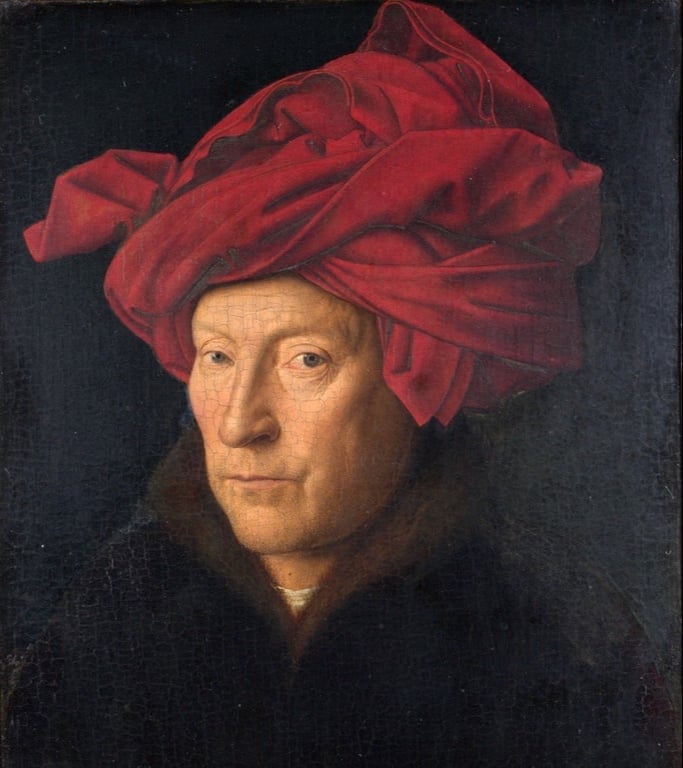
Van Eyck is also known for his portraits, which capture the individuality and humanity of his subjects with notable precision and sensitivity. One of his most famous portraits is that of Giovanni Arnolfini and his wife, now housed in the National Gallery in London.
Jan van Eyck had a deep influence on the development of European art. His use of oil paint, attention to detail, and innovative approach to composition and perspective inspired generations of later artists.