
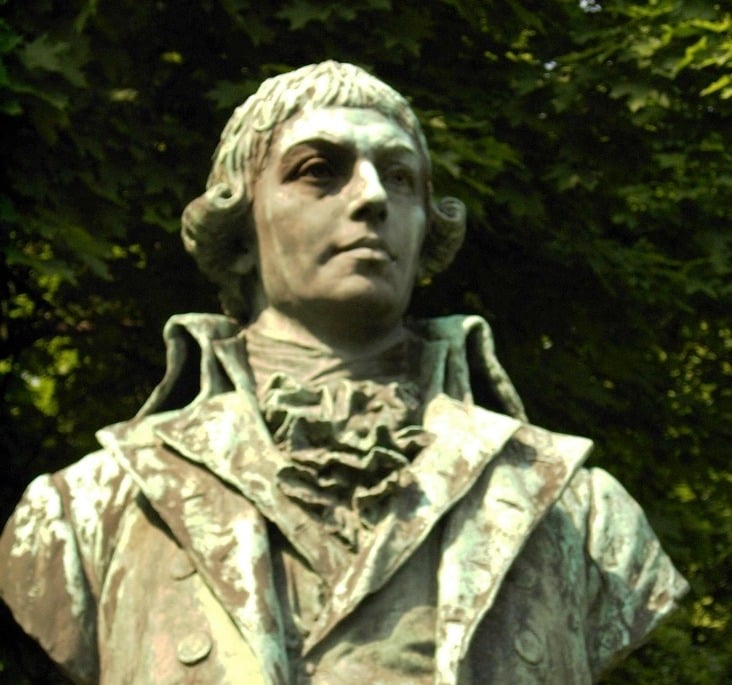
Gottfried August Bürger, an important figure in the German literary landscape of the late 18th century, was a poet, translator, and editor whose work strongly influenced the development of German Romanticism. Born in 1747 in Molmerswende, a small town in Saxony-Anhalt, Bürger was the son of a Lutheran pastor and received his education at a local gymnasium before studying law at the University of Halle. Despite his legal training, Bürger turned to literature as a full-time career, publishing his first collection of poems in 1773.
Bürger's literary output included poetry, translations, and critical essays, with his influential translation of Shakespeare's Macbeth in 1775 garnering particular acclaim. However, Bürger's most notable contribution to German literature was his development of the ballad as a literary form. Traditionally, ballads were narrative poems that focused on themes of romance, adventure, and the supernatural. Bürger's ballads on the other hand were characterized by a stark realism, an ironic tone, and an exploration of the darker aspects of human nature. Lenore, arguably Bürger's most famous ballad, tells the tale of a young woman who mourns the loss of her lover, only to discover that he has become a ghostly rider in the Wild Hunt.
Bürger's ballads were widely popular during his lifetime and had a profound influence on the development of German Romanticism. His work inspired the likes of Johann Wolfgang von Goethe and Friedrich Schiller, and helped to lay the groundwork for the Sturm und Drang movement, a literary movement that emphasized emotional intensity and individualism.
Aside from his poetry, Bürger was also an accomplished translator and editor. He translated works by Shakespeare and Voltaire into German, and edited several literary journals.
Despite his literary success, Bürger faced his share of challenges. He battled with poor health throughout his life and struggled financially. Bürger died on June 8, 1794, at the age of 46, but left behind a legacy of work that continued to shape German literature for generations to come.