
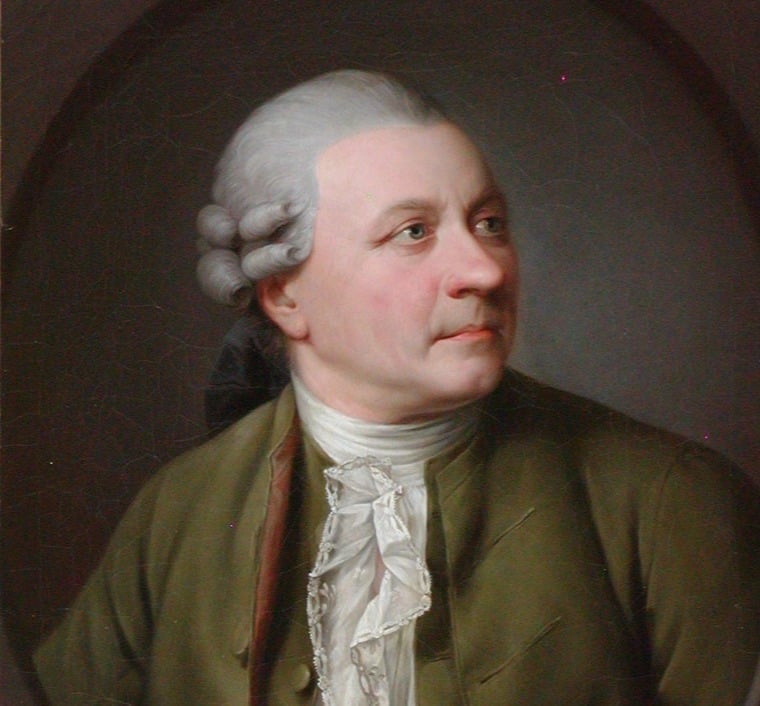
Friedrich Gottlieb Klopstock, a German poet and writer of the Enlightenment era, gained renown for his epic poem The Messiah, which is regarded as one of the most important literary works of the 18th century in Germany.
Born in 1724 in Quedlinburg, a small town in Saxony-Anhalt, Klopstock was the son of a lawyer and the daughter of a clergyman. He received his early education at a local school and then attended Schulpforta boarding school, where he obtained a rigorous education in classical languages, literature, and philosophy.
After finishing his studies at Schulpforta, Klopstock moved to Leipzig to pursue a degree in theology. However, he became disenchanted with the strict Lutheran orthodoxy taught at the university and turned to the study of literature and poetry. In 1746, he published his first collection of poems, Odes, which was well-received by critics and established his reputation as a poet.
Klopstock's magnum opus, The Messiah, was published in three parts between 1748 and 1773. The poem is an epic retelling of the story of Christ, inspired by Milton's Paradise Lost. The poem is notable for its grandiose language, vivid imagery, and emotional intensity. The Messiah was both critically and popularly acclaimed, and Klopstock became known as one of the foremost literary figures of the German Enlightenment.
Apart from his literary work, Klopstock was involved in various cultural and political activities. He was a member of the Freemasons and supported the ideals of the French Revolution. He had a significant impact on the development of the German literary language, as he introduced new words and idioms and advocated for a simpler, more natural style. He is remembered as one of the most renowned poets of the German language and a crucial figure in the advancement of German literature and culture during the Enlightenment period.