
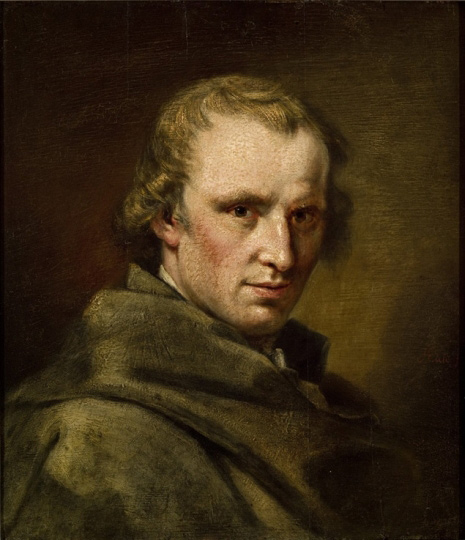
Johann Jakob Wilhelm Heinse, a German writer and literary critic, played a key role in the literary and cultural movements of his era. Despite being born into a modest family in Langewiesen, a small town in Thuringia Germany, Heinse received a notable education. He first attended the local Latin school and later enrolled in the University of Jena where he studied law and philosophy.
After completing his studies Heinse began his writing career, publishing his debut novel Artemisia in 1767. This historical novel, set in ancient Greece, established Heinse as a skilled writer with a strong interest in classical literature and culture. Over the following years, he continued to write and publish works across various genres, including plays, essays, and poetry.
During the 1770s, Heinse became involved in Berlin's literary and cultural scene, where he formed friendships with many leading writers and intellectuals of his day, such as Johann Wolfgang von Goethe and Friedrich Schiller. During this period, he also started to establish himself as a literary critic by writing reviews and essays for different literary journals and newspapers.
Heinse's most renowned work is his novel Ardinghello, which was published in 1787. The novel narrates the story of a young Venetian nobleman who falls in love with a beautiful and enigmatic woman, only to discover that she is a courtesan. The novel received praise for its striking depictions of Venetian life and the exploration of themes such as love, desire, and deceit.
In addition to his literary accomplishments, Heinse was actively involved in politics, serving as a diplomat for the Elector of Mainz in the 1780s. However, his political career came to an end when he was implicated in a scandal of embezzlement and forced to resign his position.
Heinse continued to write and publish until his death in 1803. His works significantly influenced the literary and cultural developments of his time. His contributions to the fields of literary criticism and German literature continue to be recognized and celebrated to this day.