
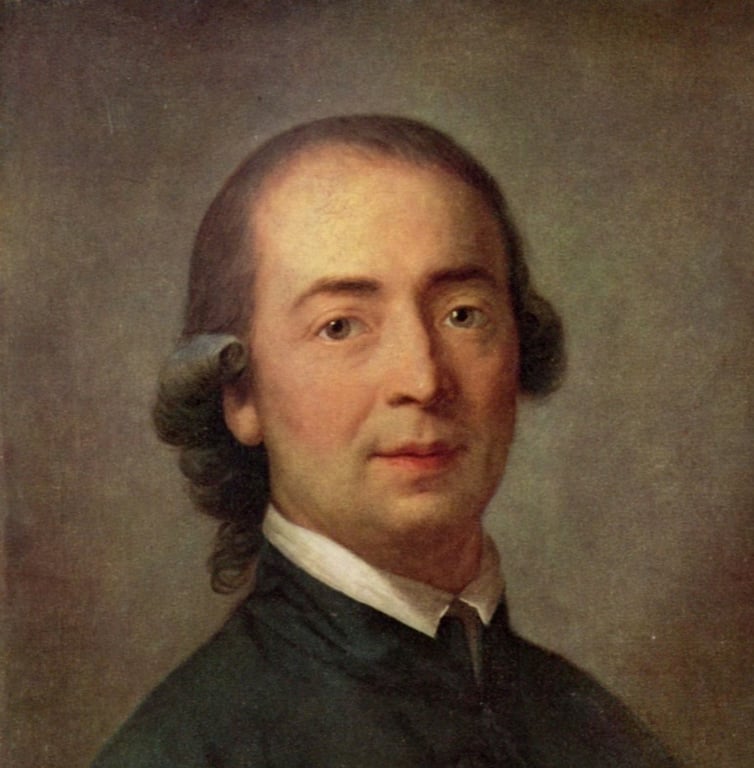
Johann Gottfried Herder, an important figure of the German Romantic movement, was a German philosopher, theologian, literary critic, and cultural theorist. Born in Mohrungen, East Prussia to a family of modest means he received his early education at a local Lutheran school and later enrolled at the University of Königsberg, where he studied theology, philosophy, and literature.
Herder was deeply influenced by Immanuel Kant's philosophy in his early years, particularly his ideas on the significance of individual experience and the limitations of human knowledge. However, Herder also developed his own unique philosophical and cultural perspectives, which he expressed in a series of influential essays and treatises.
Herder believed that every culture and society was distinct and possessed its own language, customs, and traditions, which reflected its particular character and history. He argued that these cultural differences should be respected, rather than ignored or suppressed in the pursuit of a universal, homogeneous culture. This idea, known as cultural relativism, strongly influenced German Romanticism and a generation of writers, artists, and intellectuals.
Apart from his contributions to philosophy and cultural theory, Herder was a prolific writer of literature and poetry. His most notable literary work was the collection of folk songs and ballads known as the Volkslieder, which he compiled and published in 1778. This collection drew on the traditional music and folklore of various German regions and played a key role in the development of the German Romantic movement, establishing Herder as a leading literary figure of his time.
His emphasis on the significance of individual experience and cultural diversity helped to shape the German Romantic movement.