
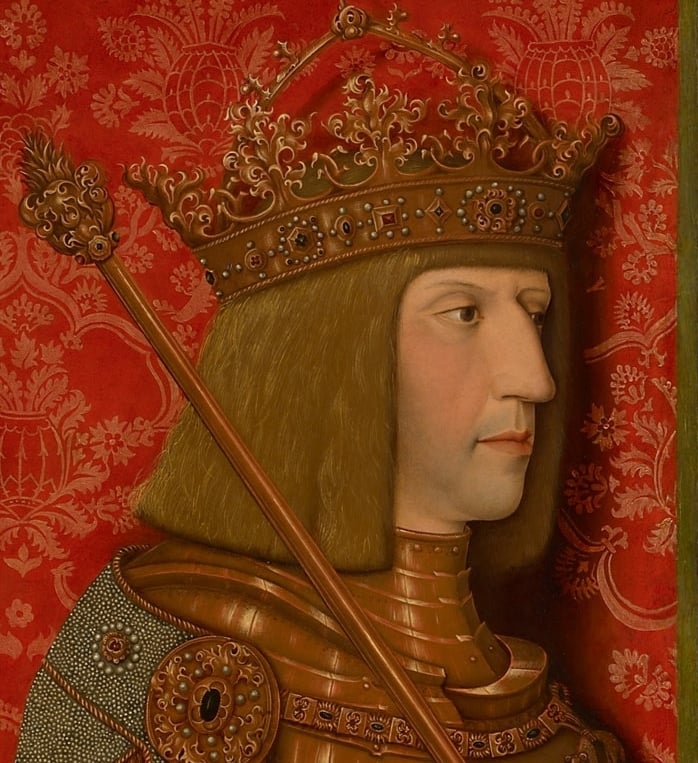
Maximilian I, Holy Roman Emperor, born on March 22, 1459, was a member of the House of Habsburg, one of the leading royal families in European history. He was the son of Frederick III, Holy Roman Emperor, and Eleanor of Portugal.
Maximilian I is regarded as one of the most important rulers of the late medieval and early modern period in Europe. He played a crucial role in shaping the political landscape of the continent during his reign, which lasted from 1493 until his death in 1519.
Maximilian I was born in Wiener Neustadt, Austria, and was educated at the University of Vienna. He was trained in the art of warfare, and as a young man, he participated in several battles and military campaigns.
In 1477, Maximilian I married Mary of Burgundy, the only daughter of Charles the Bold, Duke of Burgundy. This marriage made Maximilian I the ruler of the Netherlands and Burgundy, two of the wealthiest and most powerful regions in Europe at the time.
In 1486, Maximilian I was elected as the King of the Romans, the traditional title given to the heir to the Holy Roman Empire. He became the Holy Roman Emperor upon the death of his father in 1493.
Maximilian I faced many challenges during his reign, including political and religious conflicts, as well as wars with France and the Ottoman Empire. He was also a strong supporter of the arts and sciences, and under his patronage, the Renaissance flourished in Austria.
Maximilian I is perhaps best known for his political reforms, which helped to strengthen the power of the Holy Roman Empire. He worked to establish a centralized government, with a system of courts and councils that could administer justice and maintain order.
Maximilian I also sought to expand the territories of the empire, through a combination of military campaigns and strategic alliances. He formed alliances with other European powers, including England and Spain, to strengthen the position of the Holy Roman Empire.
Maximilian I was a dynamic and influential ruler, whose impact on European history is still felt today. He was a patron of the arts and sciences, and his support for the Renaissance helped to usher in a new era of cultural and intellectual achievement in Austria.
Maximilian I was also a skilled diplomat and military strategist, whose efforts to expand the territories of the Holy Roman Empire helped to shape the political landscape of Europe in the early modern period.
Maximilian I. was a powerful and influential figure in European history, whose legacy continues to be felt today. His political reforms, military campaigns, and support for the arts and sciences helped to shape the culture and politics of the continent during a crucial period of transition and change.