
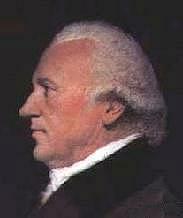
Friedrich Wilhelm Herschel was a German-born British astronomer and composer who is best known for his discovery of the planet Uranus. He was born in Hanover, Germany, in 1738, and moved to England in 1757 to pursue a career as a musician.
Herschel's interest in astronomy developed during his spare time as a musician. He began building his own telescopes and observing the night sky. His dedication to astronomy led him to discover Uranus in 1781. He initially thought it was a comet, but further observations revealed that it was a new planet. Herschel named it Georgium Sidus, in honor of King George III of England, but the name Uranus was eventually adopted.
In addition to his discovery of Uranus, Herschel also made many other important contributions to astronomy. He discovered several moons of Saturn and studied the Milky Way, making important observations about the distribution of stars. He also developed a theory of stellar evolution and proposed the idea that nebulae were not simply clouds of gas but were actually collections of stars.
Herschel's contributions to astronomy earned him many accolades, including the Copley Medal from the Royal Society. He was also appointed court astronomer to King George III, a position he held until his death in 1822.
In addition to his work in astronomy, Herschel was also an accomplished composer. He wrote many pieces of music, including 24 symphonies and several concertos. Herschel's dedication to both astronomy and music demonstrate his multidisciplinary talents and his passion for both the arts and sciences.