
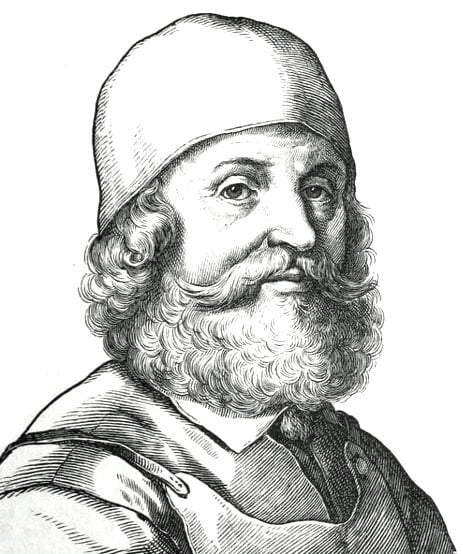
Peter Vischer der Ältere was a well-known German sculptor and goldsmith who lived during the Renaissance period. He was born in Nuremberg, Germany, in 1460 and spent most of his life there, where he created some of the most important works of art of his time.
Vischer was born into a family of artists; his father, Hermann Vischer, was a master of the Nuremberg goldsmith guild, and his brothers also worked as goldsmiths and sculptors. Peter Vischer's early artistic training came from his father, and he soon showed a natural talent for sculpture. He went on to study with Adam Kraft, another famous Nuremberg sculptor, and later worked in the workshop of Wenzel Jamnitzer, a leading goldsmith of the time.
Vischer's most famous work is the Shrine of St. Sebaldus, a massive reliquary that he created with his brothers between 1508 and 1519. The shrine is a masterpiece of Gothic art, with intricate reliefs, statuettes, and other embellishments that depict scenes from the life of St. Sebaldus, the patron saint of Nuremberg. The shrine is considered one of the greatest works of German art and is still on display in the St. Sebaldus Church in Nuremberg today.
Vischer also worked on other important projects, including the bronze equestrian statue of St. George and the Dragon in front of the Schöner Brunnen in Nuremberg's main square. He also created a number of portrait busts of prominent citizens, including the bust of Emperor Maximilian I, which is now in the Louvre Museum in Paris.
Vischer was known for his attention to detail and his ability to create lifelike and expressive figures in his sculptures. He was also skilled in the use of bronze, gold, and other precious metals, often incorporating them into his works to create intricate patterns and designs.
Peter Vischer der Ältere died in Nuremberg in 1529 at the age of 69, leaving behind a legacy of artistic excellence that continues to inspire and awe people to this day.