
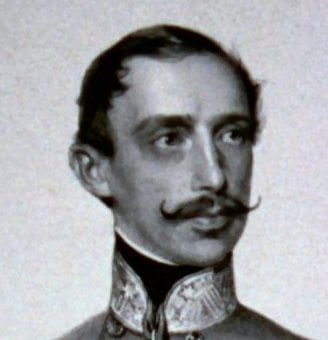
Karl was a member of the Austrian imperial family and a military commander during the Napoleonic Wars. He was born in Florence, Italy, in 1771, the son of Emperor Leopold II and Maria Luisa of Spain.
Karl entered the military at a young age and quickly rose through the ranks. He served in various campaigns against France and was appointed as commander of the Austrian army in Italy in 1796. Despite initial success, he suffered a defeat at the Battle of Rivoli in 1797 and was subsequently replaced as commander.
In 1800, Karl was appointed as commander of the Austrian army in Germany and played a key role in the Battle of Hohenlinden. He was later involved in the wars against Napoleon in 1805 and 1809, commanding Austrian forces in several major battles, including the Battle of Wagram.
In addition to his military career, Karl was also a patron of the arts and sciences. He was a member of several learned societies and founded the Oriental Academy in Vienna. He was also an important collector of art and antiquities, and his collection formed the basis of the Kunsthistorisches Museum in Vienna.
Karl was married to Henrietta of Nassau-Weilburg and had several children, including Archduke Albrecht, who became a military commander in his own right. Karl died in Vienna in 1847 and was buried in the Imperial Crypt.