
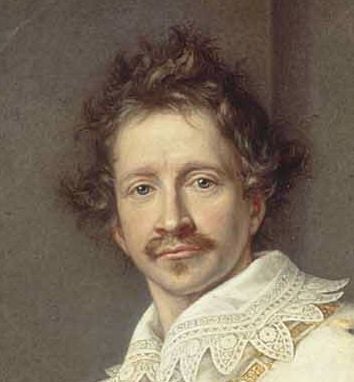
Ludwig I. von Bayern was a Bavarian king who ruled from 1825 to 1848. He was born in Strasbourg, France, on August 25, 1786, to Maximilian I. Joseph, the Elector of Bavaria, and his second wife, Caroline of Baden. Ludwig was the eldest son and heir to the throne. He played an important role in defining the German experience during his reign from 1825 to 1848. He believed that the German people should embrace their cultural heritage and promote their national identity through art and architecture.
In 1810, Ludwig married Princess Therese of Saxe-Hildburghausen, and their wedding celebration later became the famous Oktoberfest. Ludwig's reign as king was marked by his dedication to the arts and architecture, earning him the nickname "The Builder King." He commissioned the construction of numerous buildings and monuments, including the Ludwigstrasse, the Feldherrnhalle, and the Walhalla temple, which was dedicated to Germanic mythological heroes and figures.
Ludwig's approach to defining the German experience was heavily influenced by his personal interest in the arts and his belief that they were an essential part of the German identity. He was a patron of many German artists, writers, and musicians, including the composer Richard Wagner, whose music he strongly supported. Ludwig's support for the arts and culture in Bavaria was a reflection of his desire to strengthen the German identity.
One of Ludwig's most notable contributions to the German experience was his commissioning of the Walhalla temple, which was dedicated to Germanic mythological heroes and figures. The temple was designed to showcase the achievements of the German people throughout history and to promote a sense of pride in German culture.
In addition to the Walhalla temple, Ludwig also commissioned the construction of many other buildings and monuments that celebrated German culture and history, such as the Bavaria statue and the Ruhmeshalle. These structures were designed to promote a sense of unity and pride among the German people and to highlight their achievements throughout history.
Despite his efforts to promote the German experience, Ludwig's reign was marked by political unrest and criticism from some quarters. Some felt that he focused too much on promoting Bavarian culture at the expense of other regions of Germany.