
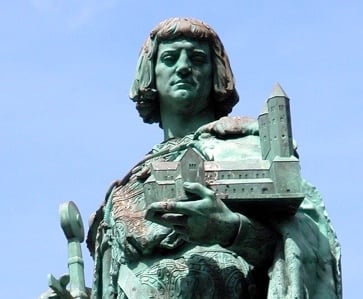
Heinrich, also known as Henry the Lion, was a powerful prince in medieval Germany. He was born into the House of Welf, a noble family with close ties to the Holy Roman Empire, and inherited his titles from his father, Duke Henry X of Bavaria. As Duke of Saxony and Bavaria, Henry controlled a vast territory and was admired for his military ability and political skill.
Henry's legacy extends beyond his military and political achievements. He was an important patron of the arts and culture and sponsored the construction of several important buildings, such as Brunswick Cathedral and Marienburg Castle. He also supported poets, musicians, and artists.
Despite his close relationship with Emperor Frederick Barbarossa, Henry had conflicts with the emperor, particularly over the issue of imperial control over the Church in Germany. In 1180, Henry was accused of disloyalty and lost his titles and lands. He went into exile in England for several years before returning to Germany and reconciling with the emperor. However, he never regained his former power and influence and passed away in 1195.
Henry the Lion's military campaigns, political accomplishments, and patronage of the arts and culture strongly influenced German history and cultural heritage. He is remembered as one of the major figures of medieval Germany.