
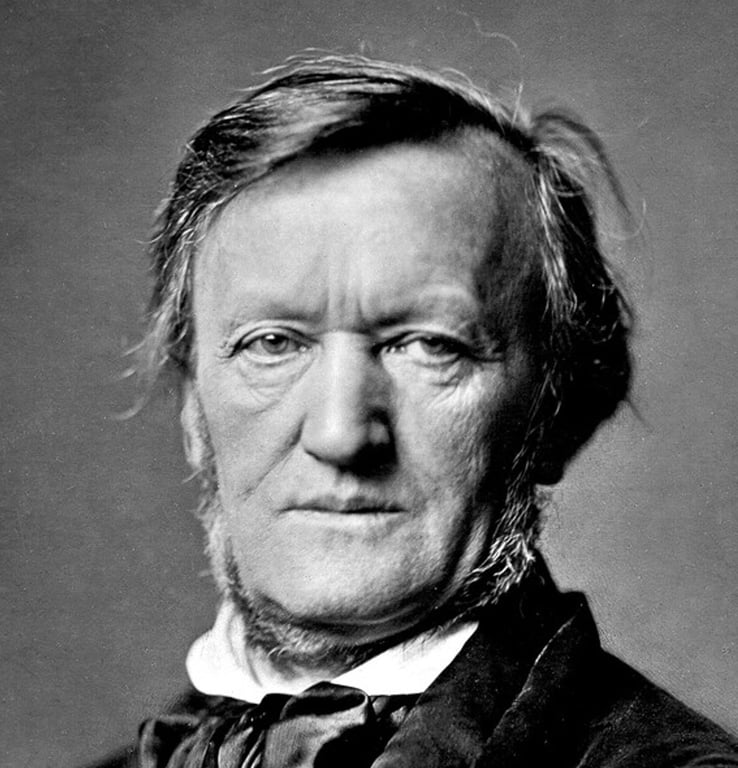
Richard Wagner was a German composer and conductor whose music and dramatic works transformed the 19th-century operatic form. He was born in Leipzig, Germany, on May 22, 1813, to a family of modest means.
Wagner showed an early aptitude for music and began studying composition in his teens. He completed his first opera, Die Feen, at the age of 21, but it was not until his mid-30s that he gained wider recognition with the premiere of his opera Rienzi in 1842.
Over the next few years, Wagner wrote a series of operas, including The Flying Dutchman, Tannhäuser, and Lohengrin. These works were notable for their integration of music, drama, and staging, and they represented a departure from the more conventional operatic forms of the time.
Wagner's most famous work is undoubtedly his four-opera cycle, The Ring of the Nibelung, which he began writing in the 1850s and completed in 1874. This work, which tells the story of gods, heroes, and mortals in a mythical world, is widely regarded as a masterpiece of Western art.
In addition to his work as a composer, Wagner was also a conductor, and he played a key role in promoting his own music and that of other composers. He was known for his intense and sometimes controversial views on music, art, and politics, and his writings on these subjects were widely read and discussed.
Wagner's legacy has been both celebrated and controversial. His music has been admired for its power, originality, and beauty, and his influence on the development of modern music has been profound. At the same time, his association with anti-Semitism and his support for German nationalism have been the subject of much debate and criticism.
Despite the controversies surrounding his life and work, Wagner remains one of the most important and influential figures in the history of Western music. His works continue to be performed and studied by musicians, scholars, and audiences around the world.