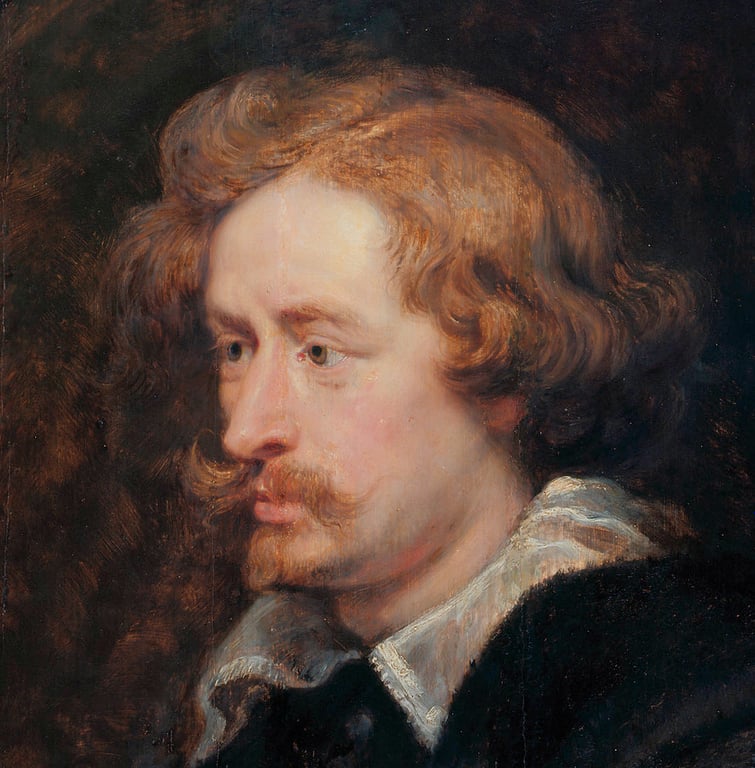
Anthony van Dyck was a Flemish Baroque artist who is widely considered one of the greatest portrait painters in the history of art. He was born in Antwerp, Belgium, to a prosperous family of silk merchants. His talent as an artist was recognized early on, and at the age of 16, he was apprenticed to the leading painter of the city, Peter Paul Rubens.
During his apprenticeship, van Dyck learned the techniques of oil painting and the principles of classical composition. He also became acquainted with the work of Italian masters such as Titian and Tintoretto, whose influence can be seen in his later work.
After completing his apprenticeship, van Dyck established his own studio in Antwerp, where he gained a reputation as a skilled and innovative artist. He became known for his ability to capture the likeness and personality of his sitters in his portraits, which were characterized by a delicate use of light and shadow and a refined sense of color.
In 1620, van Dyck was invited to work for the court of King James I of England, where he quickly became a favorite of the royal family. He was soon appointed the official court painter and was given a generous salary and lodgings in the royal palace. During his time in England, van Dyck painted some of his most famous portraits, including those of King Charles I and his family.
Van Dyck's work was highly sought after throughout Europe, and he was commissioned by a number of wealthy patrons, including the Medici family in Italy and the Archduchess Isabella in Brussels. His portraits were characterized by a sense of elegance and refinement that reflected the ideals of the Baroque period.
Despite his success, van Dyck struggled with illness throughout his life, and he died in London at the age of 42. His legacy, however, lived on in the work of later artists, who were inspired by his innovative use of light and color and his ability to capture the essence of his sitters in his portraits.