
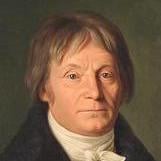
Johann Joseph Görres was a German journalist, historian, and philosopher who played an important role in the intellectual and cultural life of his time. Born in Koblenz, he studied theology and philosophy in Bonn and was influenced by the ideas of the Romantic movement.
Görres was a prolific writer and commentator on a wide range of subjects, including history, religion, politics, and culture. He worked as a journalist for several newspapers and magazines, including the influential Rheinischer Merkur, which he co-founded in 1814. He also published numerous books, including a multi-volume history of the German people, a study of the medieval mystic Meister Eckhart, and a collection of essays on Romanticism.
One of Görres' most important contributions to German intellectual life was his advocacy of Catholicism and his criticism of the Enlightenment. He argued that the Enlightenment had led to a loss of spiritual values and a superficial approach to knowledge, and he championed the role of faith and tradition in shaping society. This stance put him at odds with many of his contemporaries, who were more sympathetic to the secular and rationalist ideas of the Enlightenment.
Görres' influence extended beyond his own writings to the many writers, artists, and intellectuals who were part of the Romantic movement. He was a friend and collaborator of many of the leading figures of the time, including the poet Heinrich Heine, the philosopher Friedrich Schlegel, and the composer Franz Schubert.
Despite his importance in the cultural and intellectual life of his time, Görres' reputation declined in the years following his death. Many of his ideas were seen as outdated, and his defense of Catholicism was out of step with the secular and liberal trends of the late 19th and early 20th centuries. However, in recent years, there has been renewed interest in his work, and he is now recognized as an important figure in the history of German thought.