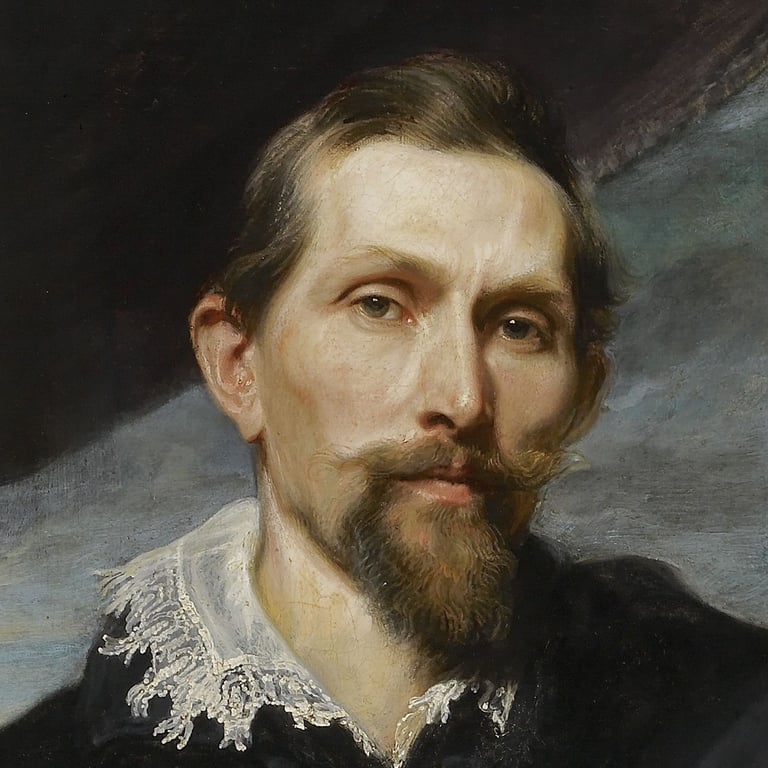
Frans Snyders was a Flemish painter known for his still life paintings, animal studies, and hunting scenes. He was born in Antwerp, the son of a successful merchant, and began his artistic training at the age of 10 under the guidance of Pieter Brueghel the Younger.
Snyders showed early promise as an artist and went on to study under Hendrick van Balen, a leading painter of the time. He developed a particular interest in painting animals and still lifes, and his works were highly sought after by collectors and art enthusiasts.
One of Snyders' most famous works is "The Pantry," a still life painting depicting a variety of fruits, vegetables, and meats arranged on a table. The painting showcases Snyders' mastery of light and shadow, as well as his attention to detail and texture.
In addition to his still lifes, Snyders also painted hunting scenes, often featuring dogs, horses, and other animals. He was highly regarded for his ability to capture the movement and energy of these animals, and his works were popular with wealthy patrons who enjoyed hunting and outdoor pursuits.
Snyders worked closely with other leading artists of his time, including Peter Paul Rubens, who frequently called on him to paint animals and other elements in his own works. Snyders' influence can be seen in the works of many later artists, including Jean-Baptiste-Siméon Chardin and Jean-Baptiste Oudry.
Frans Snyders died in Antwerp in 1657, leaving behind a legacy as one of the greatest painters of the Flemish Baroque period. His works continue to be celebrated for their beauty, technical skill, and innovative approach to still life and animal painting.