
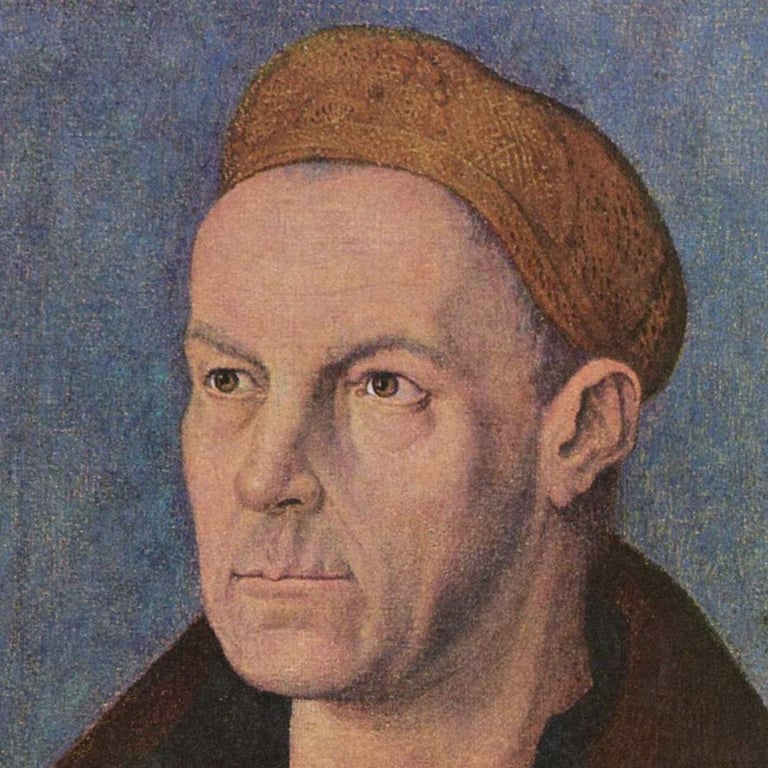
Jakob Fugger was a German merchant and banker during the Renaissance era. He was born into a wealthy family of textile traders in Augsburg, a prosperous city in southern Germany. His father, also named Jakob Fugger, had built a successful business exporting cloth to Italy, and young Jakob learned the ropes of the trade at an early age.
As he grew older, Jakob Fugger began to expand his family's business into new areas, such as mining, finance, and politics. He made shrewd investments in silver mines in Tyrol and Hungary, which helped him amass a fortune that was rumored to be larger than the treasuries of some European monarchs.
Fugger also became known as a patron of the arts and sciences. He sponsored the construction of the Fuggerei, a charitable housing complex for the poor in Augsburg that still exists today. He also funded the education of scholars and artists, including the famous humanist Erasmus of Rotterdam.
Fugger's wealth and influence brought him into contact with some of the most powerful figures of his time, including Emperor Maximilian I and King Ferdinand II of Aragon. He used his connections to secure lucrative contracts for his business and to further his political and social ambitions.
Despite his successes, Fugger was not without controversy. He was accused of exploiting the poor through his mining operations and of engaging in shady financial dealings. Some critics also accused him of using his wealth to manipulate politics and to advance his own interests at the expense of others.
Jakob Fugger died in 1525 at the age of 66, leaving behind a legacy as one of the most successful and influential merchants of his era. His name has become synonymous with wealth and power, and his story continues to fascinate historians and scholars to this day.