
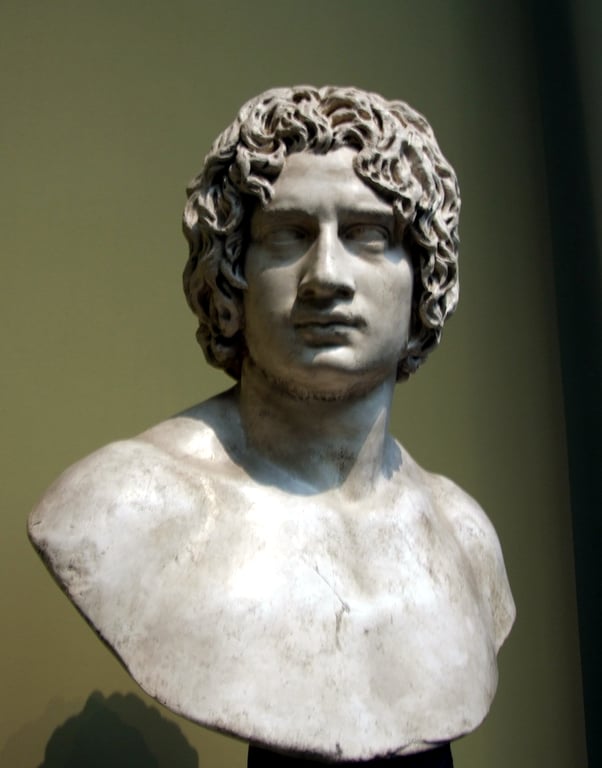
Hermann, also known as Arminius, was a chieftain of the Cherusci, a Germanic tribe that lived in what is now modern-day Germany. Born around 18 BCE, Arminius played a key role in the early history of Germanic peoples and their interactions with the Roman Empire. His greatest claim to fame was his stunning victory over the Romans in the Battle of the Teutoburg Forest in 9 CE, which had a lasting influence on the Roman Empire's expansion plans and the subsequent development of the Germanic tribes.
Arminius was born into a noble family of the Cherusci tribe, and at a young age, he was sent to Rome as a hostage to ensure the loyalty of his people to the empire. During his time in Rome, Arminius received a Roman education, learned Latin, and became familiar with Roman military tactics and strategies. He served in the Roman army and eventually achieved the rank of equites, a position reserved for the Roman equestrian order, which was just below the senatorial class.
In 9 CE, Arminius returned to his homeland and found his people chafing under Roman rule. The Romans, under the leadership of Publius Quinctilius Varus, were imposing their laws and taxes on the Germanic tribes, which led to growing unrest and resentment. Recognizing the potential for rebellion, Arminius began to secretly unite the disparate Germanic tribes, including the Cherusci, Marsi, Chatti, and Bructeri, to stand against their Roman oppressors.
Arminius' knowledge of Roman tactics and his ability to forge alliances among the Germanic tribes culminated in the Battle of the Teutoburg Forest. He lured three Roman legions, led by Varus, into a carefully planned ambush in the dense and treacherous forest. The Germanic warriors, using guerrilla tactics and taking advantage of their knowledge of the terrain, annihilated the Roman forces. It is estimated that about 20,000 Roman soldiers were killed in the battle, and the defeat sent shockwaves through the Roman Empire.
The consequences of the Battle of the Teutoburg Forest were far-reaching. The Romans abandoned their plans to conquer and integrate Germania into the empire, which marked a significant turning point in Roman expansion. The battle also bolstered the Germanic tribes' confidence and sense of identity, laying the foundation for the eventual emergence of independent Germanic kingdoms in the centuries that followed.
After the battle, Arminius continued to lead his people and defend Germania against Roman incursions. However, his success also led to internal rivalries and power struggles. In 21 CE, Arminius was assassinated by members of his own tribe, but his legacy as a heroic leader who resisted Roman domination lived on.