
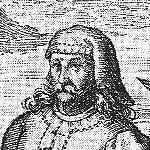
Horsa is a semi-legendary figure in early English history, known as one of the leaders of the Anglo-Saxons during their invasion and settlement of Britain in the 5th century. Horsa and his brother, Hengist, are said to have led the Anglo-Saxons to conquer Britain following the withdrawal of the Roman Empire. Historical accounts of Horsa and Hengist are often based on limited and sometimes contradictory sources, and their story has been interwoven with legend and myth.
According to the main historical sources, the Anglo-Saxon Chronicle and the works of the British monk Gildas, Hengist and Horsa were Jutish warriors from what is now Denmark or northern Germany. They were invited to Britain by the Romano-British king, Vortigern, in the mid-5th century to help defend the kingdom against the Picts and the Scots. In exchange for their military assistance, the Anglo-Saxons were promised land in the southeastern part of Britain, now known as the Kingdom of Kent.
Over time, however, the relationship between the Anglo-Saxons and the native Britons soured. It is said that the ambitious Hengist and Horsa saw an opportunity to expand their power and territory in Britain, and they began to turn against their former allies. This led to a series of conflicts, known as the Anglo-Saxon invasions or migrations, which ultimately resulted in the establishment of several Anglo-Saxon kingdoms throughout England.
Horsa's role in the conquest of Britain is less prominent than that of his brother Hengist. Horsa is primarily remembered for his part in the legendary Battle of Aylesford, which took place around 455. The battle was fought against the forces of Vortigern, who by this time had become their enemy. According to the Anglo-Saxon Chronicle, Horsa was killed during this battle, and Hengist subsequently named his son, Æsc, as his successor.
It is worth noting that the historical accuracy of the story of Horsa and Hengist has been questioned by modern scholars. Some argue that the brothers may have been entirely legendary figures, created to provide a heroic origin story for the Anglo-Saxon people. Others suggest that Horsa and Hengist may have been real historical figures but that their deeds and importance have been exaggerated or altered by later writers.
In conclusion, Horsa is a semi-legendary figure who, along with his brother Hengist, is associated with the Anglo-Saxon invasion and settlement of Britain in the 5th century. Though the historical accuracy of their story is uncertain, Horsa and Hengist have become important figures in English folklore and are often remembered as the founding fathers of the Anglo-Saxon people in Britain.