
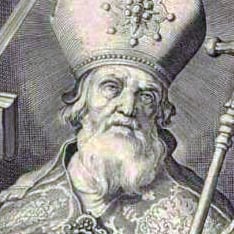
Bonifatius der Heilige was an influential and important Christian missionary, bishop, and martyr. Born around 675 in Crediton, he played an important role in the Christianization of the Germanic tribes and in the reformation of the Frankish church. His birth name was Winfrid, but he adopted the name Boniface when he became a bishop. His life can be divided into several stages, as described below.
Bonifatius was born into a noble family, and his parents intended him to have a career in the church. At a young age, he was sent to study at the monastery in Exeter, where he gained a strong foundation in Latin and theology. He later moved to the abbey of Nursling, in the Kingdom of Wessex, where he became a monk and was ordained a priest at the age of 30.
In 719, he set out on another missionary journey, this time to Rome. Pope Gregory II gave him the name Boniface and assigned him to preach the Gospel among the Germanic tribes in the region that is now Germany and the Netherlands.
He founded or restored numerous churches, established monasteries, and ordained priests among the Germanic tribes. One of his most famous acts was the felling of the sacred Donar Oak, a tree that was believed to be sacred to the pagan god Thor. This event symbolized the triumph of Christianity over paganism and furthered the conversion of the Germanic tribes.
In the 740s, he was appointed as the archbishop of Mainz which gave him authority over the churches in the Frankish kingdom. He worked closely with the Carolingian rulers, particularly Pepin the Short and his son Charlemagne, to strengthen the church's administration and discipline.
In 754, at the age of around 80, Boniface returned to Frisia to continue his missionary work. However, he and his companions were attacked by a band of pagan Frisians near the town of Dokkum. They were all killed, and Boniface was declared a martyr. His remains were eventually buried at the Fulda Abbey in Germany, which he had founded.