
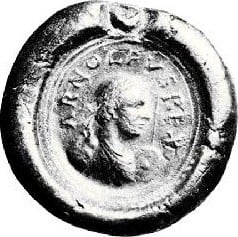
Arnulf was the Duke of Carinthia, a region in modern-day Austria and Slovenia. Later he was the King of East Francia and Holy Roman Emperor. Arnulf was a member of the Carolingian dynasty, being the illegitimate son of Carloman, the King of Bavaria, and his mistress Liutswind.
Arnulf's rise to power began when his father, Carloman, became incapacitated by a stroke in 879, leading to Arnulf being granted the rule over the Duchy of Carinthia and the March of Pannonia by his uncle, Emperor Charles the Fat.
In 887, after a series of military failures and internal struggles, Charles was deposed by the East Frankish nobles and they elected Arnulf as the King of East Francia, effectively splitting the Carolingian Empire. Arnulf then successfully fended off various threats to his kingdom, such as the Viking incursions and challenges from rival kings.
In 894, Arnulf decided to intervene in Italy, which was under the control of the non-Carolingian king Guy III of Spoleto. Guy had been crowned Holy Roman Emperor in 891 by Pope Stephen V, but his rule was contested. Arnulf's campaign in Italy was initially successful, and he entered Rome in February 896. There, Pope Formosus crowned Arnulf as the Holy Roman Emperor.
His reign as emperor was short-lived. In the same year, he suffered a stroke, and his health began to decline rapidly. He was forced to return to Germany, leaving Italy in a state of political chaos. Arnulf's son, Ratold, was declared king in Italy but was unable to maintain control. As a result, the Italian kingdom and the imperial title eventually passed to Guy III.
Arnulf died in 899 and was succeeded by his son Louis the Child who ruled East Francia until his death in 911. The end of Louis the Child's reign marked the end of the Carolingian dynasty's rule in East Francia and the beginning of the Ottonian dynasty with the election of Conrad I. as king.