
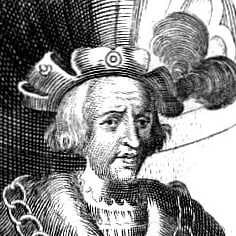
Arnulf, Duke of Bavaria, also known as Arnulf the Bad was a important figure in the history of medieval Europe. Born in 885, he ruled as the Duke of Bavaria from 907 until his death in 937. Arnulf was a member of the prestigious Luitpolding dynasty, which played a vital role in the establishment of the medieval German state. His reign saw significant political and military developments in the region, as he sought to consolidate and expand Bavarian territory and power.
Arnulf was the son of Luitpold, who was a successful military leader who served under the Carolingian emperors and was instrumental in defending the eastern frontier of the Frankish Empire. Luitpold's achievements laid the foundation for the eventual rise of the Luitpolding dynasty to power in Bavaria.
Arnulf's rise to power began after the death of his father in the Battle of Pressburg in 907. Following the defeat of the Bavarians by the Hungarians, the situation in the duchy was precarious, and it was crucial for Arnulf to assume leadership and restore stability. In 907 he was recognized as the Duke of Bavaria and he inherited a realm that was beset by both internal and external challenges.
Arnulf's reign was marked by a series of military campaigns and alliances aimed at consolidating and expanding his power within the realm. One of Arnulf's major military achievements was his victory over the Hungarians at the Battle of Inn in 913. This victory halted the Hungarian invasions into Bavaria, which had been a major threat to the region since the death of his father. Arnulf also took an active role in the ongoing power struggles within the Frankish Empire, often siding with the German kings against the West Frankish kings.
In 920, Arnulf joined forces with the newly elected German king, Henry I, also known as Henry the Fowler, in a campaign against the rebellious West Frankish Duke, Gilbert of Lotharingia. This alliance proved to be beneficial, as it allowed Arnulf to secure his eastern frontier and strengthen his position within the empire.
Arnulf's relationship with the Church was complicated and often contentious, with one off his most important disputes being with the Archbishop of Salzburg, who opposed Arnulf's attempts to exert control over the church's properties and rights. This conflict led to the excommunication of Arnulf in 931, which was lifted after a reconciliation in 933.
Arnulf's death marked the end of an era of significant political and military achievements for the Luitpolding dynasty in Bavaria. He was succeeded by his son Eberhard, who was unable to maintain the power and prestige his father had built. As a result, the Luitpolding dynasty's rule in Bavaria eventually came to an end with the rise of the Ottonian dynasty.