
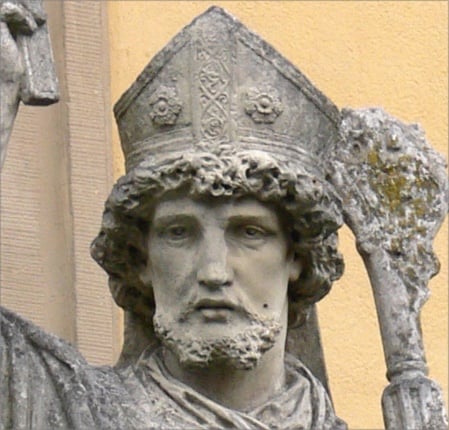
Otto von Bamberg was a German bishop and missionary who lived during the 11th and early 12th centuries. He served as the Bishop of Bamberg from 1102 until his death in 1139 and was known for his missionary work among the Pomeranian people, as well as his diplomatic and political activities.
Otto von Bamberg was born around 1060 to a noble family in Swabia, a region in present-day southwestern Germany. He received an excellent education, studying at the cathedral school in Bamberg and later at the court of Emperor Henry IV, where he served as a chaplain and gained experience in diplomacy and politics.
In 1102, Otto was appointed as the Bishop of Bamberg by Emperor Henry IV. He then served as a mediator between the emperor and the papacy during the Investiture Controversy, a conflict over the appointment of bishops and abbots that divided the empire and the church.
Otto is perhaps best known for his missionary work among the Pomeranian people, a West Slavic tribe living in the region of present-day northeastern Germany and northwestern Poland. At the request of Duke Bolesław III Wrymouth of Poland, Otto undertook two missionary journeys to Pomerania in 1124 and 1128, with the goal of converting the Pomeranians to Christianity and integrating them into the sphere of Western Christendom.
During his missions, Otto baptized thousands of Pomeranians, established churches and religious institutions, and trained local clergy to continue the work of evangelization after his departure. His efforts were largely successful, and the Christianization of Pomerania laid the foundation for its political and cultural integration into Western Europe.
Otto von Bamberg died in 1139. In recognition of his contributions to the church and his success in converting the Pomeranian people, he was canonized as a saint in 1189 by Pope Clement III.