
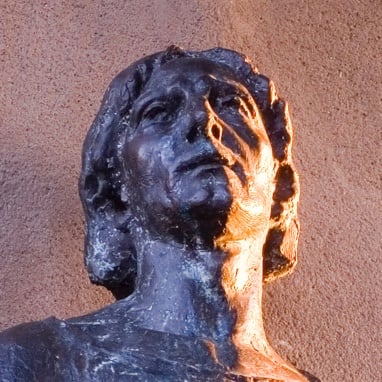
Wolfram von Eschenbach was a German Minnesinger, poet, and knight who is best known for his epic narrative poem Parzival. As a Minnesinger, Wolfram composed and performed lyric poetry that dealt with themes of courtly love, chivalry, and medieval society. He was a contemporary of Walther von der Vogelweide and is considered one of the most important and influential poets of the Middle High German period.
Wolfram's origins are uncertain, but it is generally believed that he was a member of a lower noble family from the village of Eschenbach, in the region now known as Franconia in modern-day Bavaria.
While Wolfram is thought to have composed a number of poems and songs, his most famous work is Parzival. This epic narrative poem, written in Middle High German verse, tells the story of the eponymous hero, Parzival, and his quest for the Holy Grail. The story is based on an earlier French work, Perceval, the Story of the Grail by Chrétien de Troyes. However, Wolfram expanded and adapted the story, adding his own unique perspectives and narrative elements.
Parzival consists of 16 books and over 24,000 lines of verse, making it one of the longest and most complex works of its time. The poem explores themes of chivalry, courtly love, spirituality, and the challenges of personal growth and self-discovery. Wolfram's work is notable for its psychological depth, as well as its vivid and imaginative storytelling. The character of Parzival is portrayed as an initially naïve and inexperienced young knight who must overcome a series of trials and tribulations to achieve spiritual enlightenment and become the Grail King.
In addition to Parzival, Wolfram also composed other works, such as the epic poem Willehalm, which tells the story of the Christian knight Willehalm and his battles against Saracen invaders, and the fragmentary poem Titurel, which expands on the Grail mythos.
Wolfram's works were highly influential during his lifetime and continued to be admired and studied in the centuries that followed.