
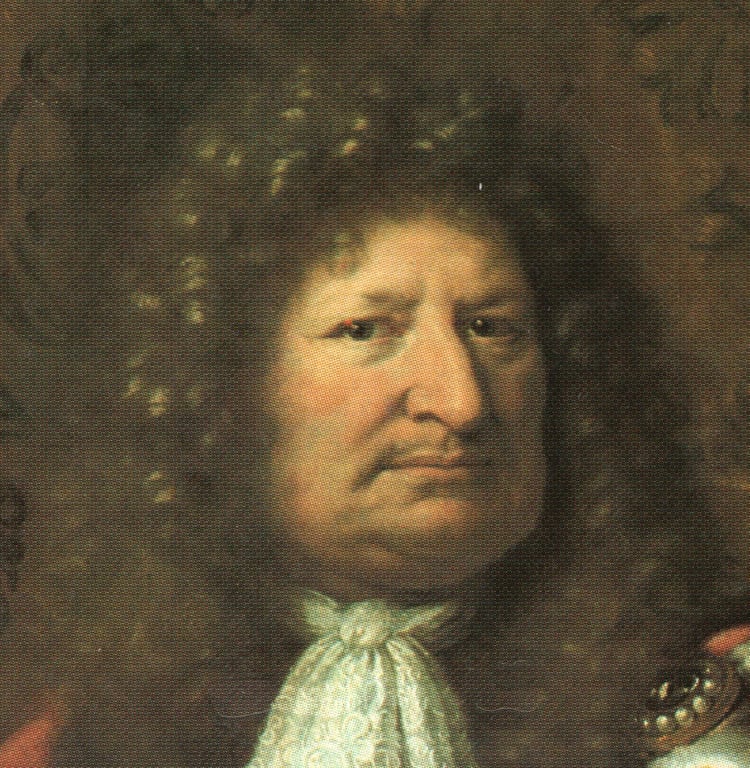
Friedrich Wilhelm, also known as the "Great Elector," was the Elector of Brandenburg and Duke of Prussia from 1640 until his death. He was born in Berlin, the son of Georg Wilhelm, the Elector of Brandenburg, and his wife Elisabeth Charlotte of the Palatinate.
Friedrich Wilhelm was known for his military and administrative reforms, which transformed Brandenburg-Prussia into a significant power in Europe. In the early years of his reign, he faced several challenges, including a war with Sweden and a rebellion by the nobility, but he managed to overcome these obstacles and establish a strong centralized state.
One of his most important accomplishments was the creation of a permanent standing army, which gave Brandenburg-Prussia the military power to defend itself against its enemies. He also established a system of mandatory military service for all men, which ensured that the army was always well-staffed and trained.
Friedrich Wilhelm was also responsible for promoting religious tolerance in his territories. He granted religious freedom to Protestants and Catholics alike, which helped to attract skilled craftsmen and merchants to the region. This, in turn, contributed to the economic growth of Brandenburg-Prussia.
In addition to his domestic policies, Friedrich Wilhelm was also an active player in European politics. He formed alliances with other European powers, including the Netherlands and Austria, and fought in several wars against France and Sweden. He was also involved in the negotiations leading up to the Treaty of Westphalia, which ended the Thirty Years' War.
Friedrich Wilhelm died in 1688 and was succeeded by his son Friedrich III, who later became King Friedrich I of Prussia. He is remembered as one of the most important figures in German history and a pivotal figure in the development of the Prussian state.