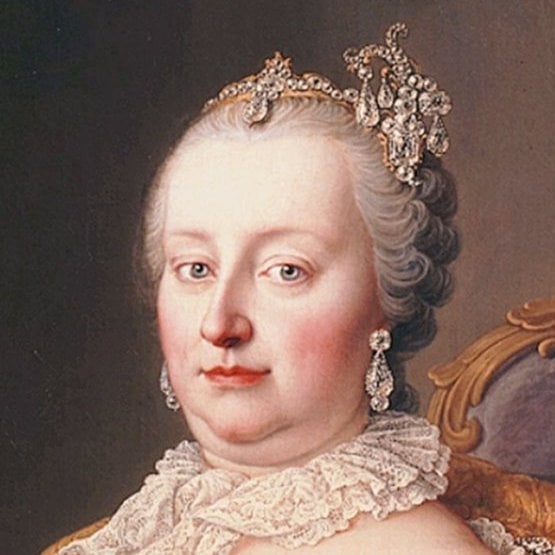
Maria Theresia was the only female ruler of the Habsburg dominions and one of the most powerful monarchs in European history. She was born on May 13, 1717, in Vienna, the eldest daughter of Charles VI, Holy Roman Emperor, and his wife Elisabeth Christine of Brunswick-Wolfenbüttel.
Maria Theresia's childhood was marked by her father's efforts to secure the succession for his daughter in the face of the Salic law, which prevented females from inheriting the Habsburg lands. He succeeded in getting the Pragmatic Sanction passed in 1713, which recognised Maria Theresia as his successor.
In 1736, Maria Theresia married Francis Stephen, Duke of Lorraine, who later became Holy Roman Emperor as Francis I. The couple had sixteen children, including future emperors Joseph II and Leopold II.
In 1740, Charles VI died, and Maria Theresia succeeded him as the ruler of the Habsburg lands. Her reign began with the War of the Austrian Succession, in which she faced challenges to her rule from other European powers. Despite initial setbacks, she managed to hold onto her territories and signed the Treaty of Aix-la-Chapelle in 1748, which secured her position.
Maria Theresia was a reformer who modernised the administration of her lands and introduced measures to improve the lives of her subjects. She established compulsory education, abolished torture, and reformed the legal system.
In 1765, Maria Theresia's husband Francis I died, and she became the sole ruler of the Habsburg lands. Her later years were marked by conflicts with her son Joseph II, who sought to implement radical reforms that she opposed.
Maria Theresia died on November 29, 1780, at the age of 63, after contracting pneumonia. She was succeeded by her son, Joseph II.