
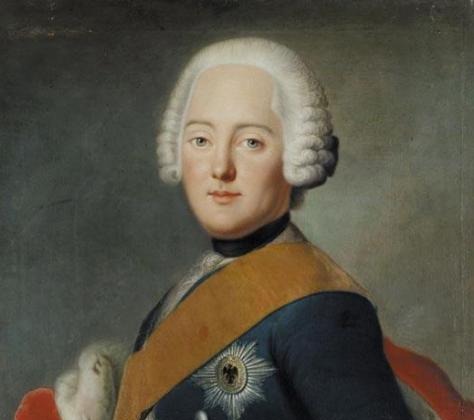
Ferdinand was a member of the royal House of Brunswick-Lüneburg and a prince of the Holy Roman Empire. He was the fourth son of Charles I, Duke of Brunswick-Wolfenbüttel, and Princess Philippine Charlotte of Prussia.
Ferdinand was educated in a traditional and rigorous military manner, and developed a keen interest in military affairs from an early age. He served in the Prussian army during the Seven Years' War and demonstrated exceptional bravery and tactical acumen on the battlefield.
In 1766 Ferdinand was appointed the commander-in-chief of the Hessian army by his brother, William VIII, Landgrave of Hesse-Kassel. He introduced several reforms to the Hessian army, including improving training and discipline, which made it one of the most effective fighting forces in Europe at the time.
During the American Revolutionary War, Ferdinand served as a commander of the Hessian troops who fought for the British. He led the Hessians in several battles, including the Battle of Long Island, the Battle of White Plains, and the Battle of Trenton. Despite the eventual defeat of the British, Ferdinand's tactical brilliance and leadership were widely admired and respected by both sides.
After the war, Ferdinand returned to Europe and continued to serve as the commander-in-chief of the Hessian army until his death in 1811. He remained an influential military figure in Europe, and his tactics and strategies continued to influence military thought long after his death.