
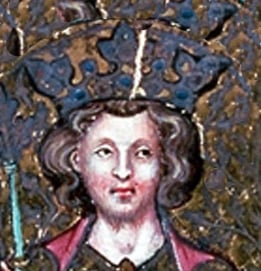
Conrad II, also known as Conrad the Elder and Conrad the Salic, was Holy Roman Emperor from 1027 until his death in 1039, and the first of four Salian emperors who reigned for one century until 1125.
Born in 990, Conrad inherited the titles of count of Speyer and Worms during childhood after his father died. He extended his influence beyond those inherited lands and came into favour with the princes of the kingdom. That support led to his appointment as king of the empire after the imperial dynastic line was left without a successor.
Conrad II adopted and adapted the Church policy and general practices of rulership used by his Ottonian predecessor Henry II, who in turn had been associated with Charlemagne. While he was not anti-monastic, Conrad abandoned the favouritism shown to men of the Church under Henry II. In Italy, he initially relied on the bishops to maintain imperial power.
Conrad's reign marked a high point of medieval imperial rule during a relatively peaceful period for the empire. Upon the death of King Rudolph III of Burgundy in 1032, Conrad claimed dominion over the Kingdom of Burgundy, then conquered it with German and Italian troops, and incorporated it into the empire. The three kingdoms of Germany, Italy, and Burgundy formed the basis of the new empire as the "royal triad".