
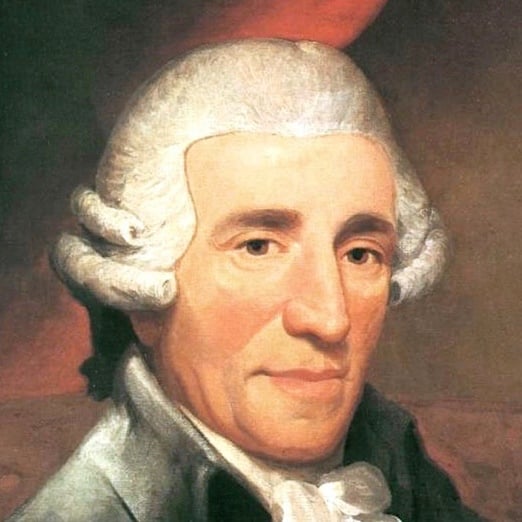
Franz Joseph Haydn was an Austrian composer widely regarded as one of the most important figures in the development of classical music. He was born in Rohrau, a small village near Vienna, into a modest family of wheelwrights.
At the age of six, Haydn began his musical education as a chorister at St. Stephen's Cathedral in Vienna, where he received training in singing, keyboard, and violin. After leaving the choir, he worked as a freelance musician, playing the violin in various orchestras and serving as a music teacher and accompanist.
In 1759, Haydn was appointed Kapellmeister to the Esterházy family, one of the leading noble families in Austria. He spent nearly thirty years in their service, primarily at their residence in Eisenstadt, where he was responsible for composing and conducting music for the court orchestra and the chapel.
During this time, Haydn produced an enormous amount of music, including symphonies, chamber music, operas, and masses. He is credited with developing the classical symphony into its mature form, with works like his "Paris" and "London" symphonies becoming some of the most famous and influential pieces of the classical era. His string quartets are also considered groundbreaking, with his Op. 33 quartets in particular helping to establish the genre as a major form of chamber music.
Haydn's music was widely popular during his lifetime, and he was recognized as one of the most important composers of his time. He was also a mentor to many younger composers, including Mozart and Beethoven, who regarded him as a major influence on their own work.
In addition to his musical achievements, Haydn was known for his warm personality and sense of humor, and he was beloved by those who knew him. He died in Vienna in 1809 at the age of 77, leaving behind a vast legacy of music that continues to be celebrated and studied to this day.