
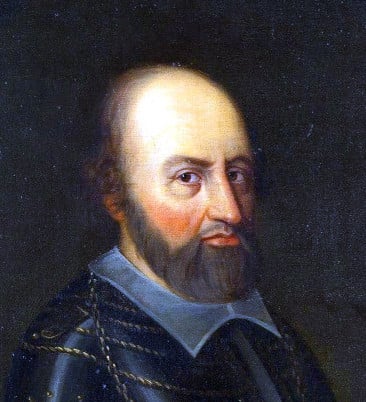
Wolter von Plettenberg was a German military commander, Grand Master of the Livonian Order, and later the first Lutheran bishop of the city of Marienwerder. Born in Westphalia, Germany, Plettenberg was a member of a noble family and received a traditional education, including military training.
In 1479, Plettenberg joined the Livonian Order, a Germanic military order that had been established in the Baltic region to defend against Russian expansion. He rose through the ranks and became the Grand Master of the Order in 1494. Under his leadership, the Order gained significant territorial control, including the city of Riga in modern-day Latvia.
During his tenure, Plettenberg was known for his military skill and shrewd diplomacy. He negotiated alliances with neighboring powers, such as Poland and Sweden, to counteract the growing threat from Russia. He also oversaw the construction of several fortifications, including the famous Tarvastu Castle in Estonia.
Plettenberg's leadership was not without controversy, however. He was accused of being too lenient with the local Estonian population and not being aggressive enough in defending the Order's territories. This led to internal conflicts within the Order and eventually contributed to its decline.
In 1525, Plettenberg converted to Lutheranism and was subsequently appointed as the first Lutheran bishop of Marienwerder. He played an important role in the spread of the Reformation in Prussia, advocating for the establishment of Lutheran schools and churches. Despite his conversion, Plettenberg remained respected by both Catholics and Lutherans for his military achievements and diplomatic skills.
Plettenberg died in 1535 and was buried in the Marienwerder Cathedral. His legacy as a military leader and statesman continues to be remembered in both Germany and the Baltic states.