
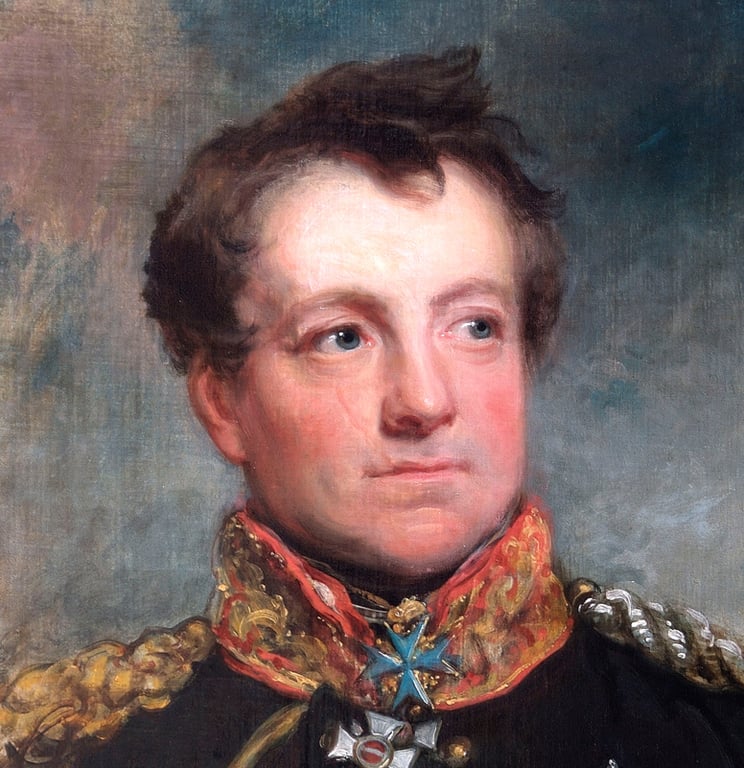
August Wilhelm Anton Graf Neidhardt von Gneisenau was a Prussian military leader and strategist during the Napoleonic Wars. He was born in Schildau, Saxony, and was raised in a family with a long military tradition.
Gneisenau joined the Prussian army in 1778 and served in the War of the Bavarian Succession and the Dutch Patriot Revolt. He was promoted to the rank of major in 1794 and fought in the campaigns against Revolutionary France.
In 1806, Prussia declared war on France as part of the Fourth Coalition. Gneisenau was appointed as Chief of Staff to Field Marshal Blücher, and together they fought against Napoleon's forces. After the defeat at the Battle of Jena-Auerstedt, Gneisenau worked to reform and modernize the Prussian army. He introduced new tactics and strategies, including the creation of the Landwehr, a reserve force of citizen-soldiers.
During the War of Liberation, Gneisenau played a key role in the coalition's victory over Napoleon. He led the Prussian forces at the Battle of Waterloo and was instrumental in the planning and execution of the battle. After the war, he was appointed as Chief of the General Staff of the Prussian army and continued to modernize the military.
In addition to his military career, Gneisenau was also involved in politics. He was a member of the Prussian Council of State and supported the liberal reforms of King Frederick William III. He died in 1831 in Posen, Prussia and was buried in the Invalidenfriedhof in Berlin.