
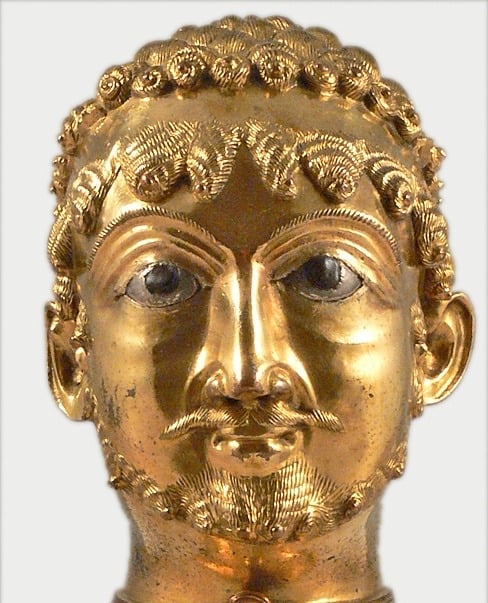
Frederick I, also known as Frederick Barbarossa, reigned as the Holy Roman Emperor for 35 years from 1155 until his death in 1190. He belonged to the Hohenstaufen dynasty, one of the most influential and powerful families in medieval Germany.
Prior to his ascension to the imperial throne, Frederick served as the Duke of Swabia from 1147 to 1152 under the name Frederick III. His lineage as the son of Duke Frederick II made him an acceptable candidate for the prince-electors' approval. In 1178 Frederick was crowned the King of Burgundy at Arles, solidifying his position in the region.
Frederick was regarded as one of the Holy Roman Empire's greatest emperors. Among his notable contributions was the revival of the Corpus Juris Civilis, the Roman system of law, which served as a counterbalance to the papal power that had previously dominated the German states since the resolution of the Investiture Controversy.
In addition to his accomplishments as a ruler, Frederick also participated in the Third Crusade and attempted to travel overland to the Holy Land. Tragically, he drowned while crossing the Saleph River in 1190, leading to the majority of his army abandoning the Crusade before they could reach Acre. Despite his untimely death, Frederick's legacy endures as a testament to his lasting influence on Central European society and culture.