
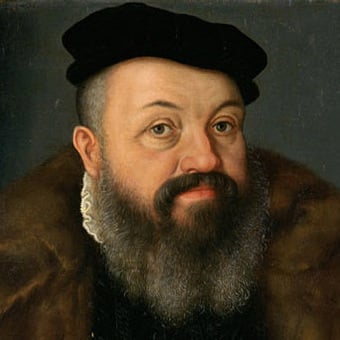
Christoph was a German nobleman and statesman who served as the Archbishop of Würzburg from 1544 until his death. He was born in the town of Bad Mergentheim in the region of Franconia, which was then part of the Holy Roman Empire.
At a young age, Christoph entered the clergy and quickly rose through the ranks, becoming a bishop in 1541 and then Archbishop of Würzburg just three years later. As archbishop, Christoph was responsible for overseeing the spiritual and administrative affairs of the diocese, which included much of northern Bavaria.
During his tenure as archbishop, Christoph played a key role in the Counter-Reformation, a movement within the Catholic Church that aimed to counter the spread of Protestantism in Europe. He implemented a number of reforms within the diocese of Würzburg, including the establishment of seminaries to train priests and the creation of new religious orders to serve the needs of the faithful.
Christoph was also a skilled diplomat and statesman, and he played an important role in the political affairs of the region. He maintained close ties with the Holy Roman Emperor, Charles V, and he worked to strengthen the position of the Catholic Church in northern Bavaria. In 1561, he founded the University of Würzburg, which became a center of learning and scholarship in the region.
Despite his many accomplishments, Christoph's reign was not without controversy. He was known for his harsh treatment of Protestants, whom he viewed as a threat to the Catholic Church. He also had a reputation for being ruthless in his efforts to maintain control over the diocese, and he was not above using force to suppress dissent.
Christoph died in 1568 and was buried in the Cathedral of Würzburg. Despite his mixed legacy, he is remembered as an important figure in the history of the Catholic Church in Germany, and his contributions to the Counter-Reformation are still recognized today.