
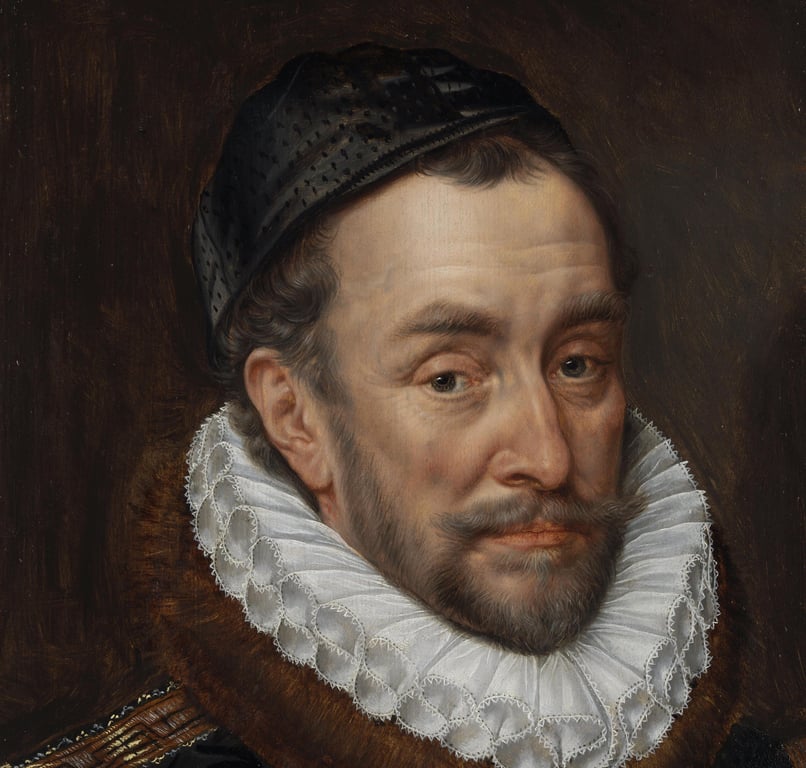
William I of Orange, also known as William the Silent, was a statesman and military leader who played a key role in the Dutch War of Independence against Spain.
William was born in 1533 in the city of Nassau, Germany. He was the eldest son of William, Count of Nassau, and Juliana of Stolberg. His family was a noble family in Germany, with close ties to the House of Orange, a powerful family in the Netherlands.
William inherited the title of Prince of Orange from his cousin René of Châlon, who died childless in 1544. This title gave William considerable influence in the Netherlands, which was then a collection of provinces under the rule of the Spanish Habsburg dynasty.
In the 1560s, William became increasingly concerned about the growing religious tensions in the Netherlands. The country was divided between Protestants and Catholics, and the Spanish rulers were determined to stamp out the Protestant faith. William, who was himself a Protestant, became a leading advocate for religious freedom and tolerance.
In 1568, William led a rebellion against the Spanish rulers, launching what became known as the Eighty Years' War. He was initially successful, winning a number of key battles and securing the support of many of the Dutch provinces.
However, the Spanish forces eventually gained the upper hand, and William was forced to flee the country. He spent the rest of his life in exile, living in various parts of Europe and continuing to advocate for Dutch independence.
In 1584, William was assassinated in Delft by a supporter of the Spanish king. His death was a major blow to the Dutch cause, but it also served to galvanize the resistance movement and strengthen the resolve of those fighting for independence.
William I of Orange is remembered as a key figure in Dutch history, and as a symbol of resistance against oppression and tyranny. His legacy is commemorated in many ways, including through the national anthem of the Netherlands, which begins with the words "Wilhelmus van Nassouwe".