
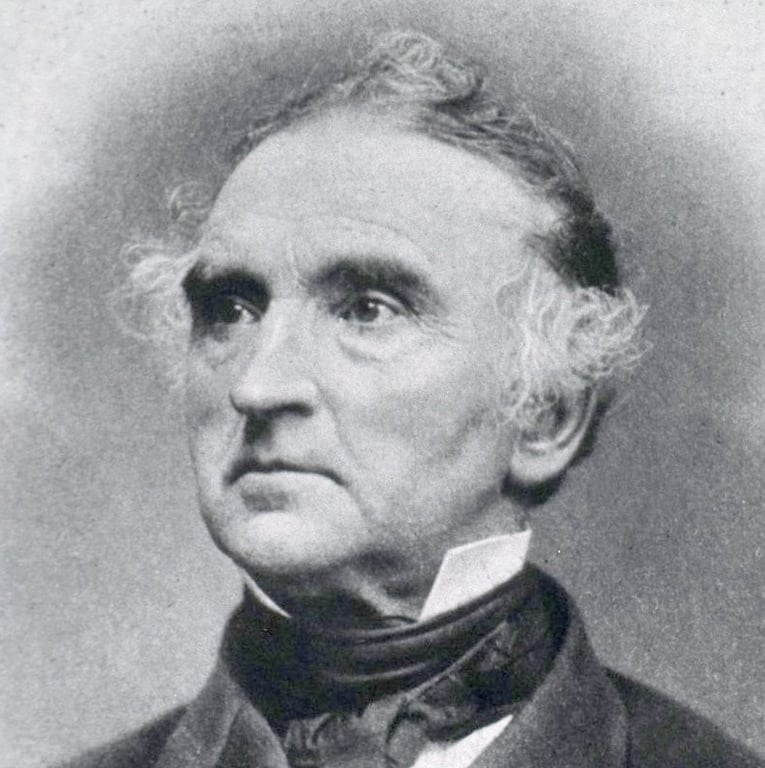
Justus von Liebig was a German chemist who made important contributions to the fields of organic and agricultural chemistry. Born in Darmstadt, Germany, he was the son of a paint and wallpaper manufacturer.
Liebig attended the University of Bonn and later studied under the famous chemist Gay-Lussac in Paris. In 1824, he received his doctorate from the University of Erlangen. Liebig then worked as a lecturer in chemistry at the University of Giessen before becoming a professor at the University of Munich in 1852.
Liebig is perhaps best known for his work on organic chemistry. He is credited with discovering the compound benzene, as well as developing the technique of combustion analysis to determine the elemental composition of organic compounds. Liebig also made important contributions to the field of agricultural chemistry. He was an advocate for the use of mineral fertilizers and wrote extensively on the subject.
Liebig was a prolific writer and his work had a significant impact on the scientific community. He published numerous books and articles on chemistry, including his famous "Organic Chemistry in its Applications to Agriculture and Physiology" in 1840. This work is considered a landmark in the history of chemistry and helped to establish organic chemistry as a distinct field of study.
Liebig was also an influential teacher and mentor. His students included some of the most notable chemists of the time, including Robert Bunsen and Friedrich Wöhler. Liebig's work had a lasting influence on the field of chemistry and his contributions are still recognized and celebrated today.