
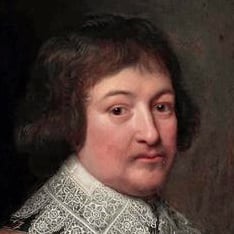
Bernhard was a German nobleman who played an important role in the Thirty Years' War. Born in Weimar in 1604, he was the second son of Johann, Duke of Saxe-Weimar, and Dorothea Maria of Anhalt.
Bernhard's military career began at a young age when he joined his father's army in the Schmalkaldic War. He later fought in the Eighty Years' War in the Netherlands, where he gained valuable experience as a commander. In 1629, he returned to Germany and became the commander of the Swedish army in the Thirty Years' War.
Under Bernhard's leadership, the Swedish army won several key battles, including the Battle of Breitenfeld in 1631 and the Battle of Lützen in 1632. Despite his success, Bernhard was forced to resign from his position in 1634 due to disagreements with the Swedish King Gustavus Adolphus.
After leaving the Swedish army, Bernhard continued to fight in the Thirty Years' War as an independent commander. He captured several important towns and castles, including Rheinfelden and Breisach. In 1638, he was appointed commander of the French army in Germany, where he played a key role in the capture of Breisach.
Bernhard died in 1639 at the age of 35 during the Siege of Neuenburg. He was succeeded as Duke of Saxony-Weimar by his younger brother, Wilhelm.