
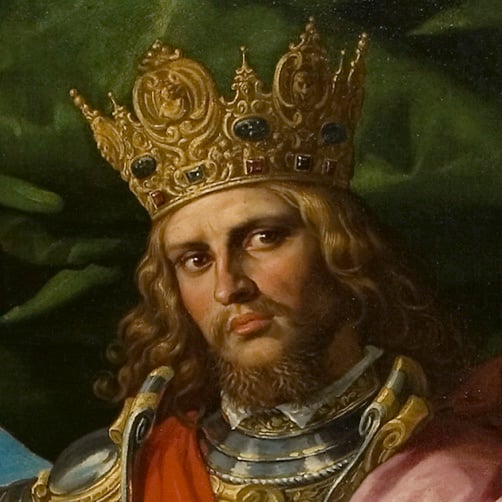
Theodoric I., King of the Visigoths, was born in the early 5th century, a time when the Western Roman Empire was in decline. He was a pivotal figure in the history of the Visigoths, a powerful Germanic tribe that originated from the region now known as Scandinavia. The Visigoths had migrated across Europe, and by the time of Theodoric's birth, they had already established a significant presence in the Roman Empire.
Theodoric rose to power following the death of his father, Alaric I., who had led the Visigoths to sack Rome in 410. After the death of his older brother, Athaulf, in 415, Theodoric was elected king by his people. Under his rule, the Visigoths continued to wield power and influence over the weakened Western Roman Empire.
Theodoric's reign saw a shift in Visigothic policy, from raiding and pillaging Roman territories to establishing alliances and agreements with the empire. He cultivated diplomatic relationships with the Roman authorities, most notably the powerful general Flavius Aetius, who was the de facto ruler of the Western Roman Empire.
In 418, Theodoric reached an agreement with the Roman Emperor Honorius, which granted the Visigoths the status of foederati. This term described groups that were allowed to settle within the Roman Empire in exchange for military service. The Visigoths were given the region of Aquitaine in modern-day France as their homeland, where they could settle and govern themselves independently while maintaining their alliance with Rome.
Theodoric's policy of cooperation with the Romans was not universally accepted among his people. Many Visigoths still harbored resentment towards the empire. However, Theodoric understood the importance of stability and unity for the long-term prosperity of his people, and he managed to maintain a delicate balance between the desires of his subjects and the needs of his Roman allies.
In 451, the Huns, led by the fearsome Attila, invaded Gaul and threatened to overwhelm the Roman Empire. Theodoric I joined forces with his former enemy, Flavius Aetius, to repel the Hunnic invasion. Together, the Visigoths, Romans, and other barbarian tribes fought against the Huns in the Battle of the Catalaunian Plains, one of the most important battles in European history. The coalition emerged victorious, halting the advance of the Huns and protecting Western Europe from their rampage.
Theodoric did not live to celebrate the victory. He was killed during the battle, leaving the Visigothic kingdom to his son, Thorismund. Theodoric's death marked the end of an era, but his descendants would continue to lead the Visigoths, eventually carving out a kingdom of their own in Spain and contributing to the eventual collapse of the Western Roman Empire.