
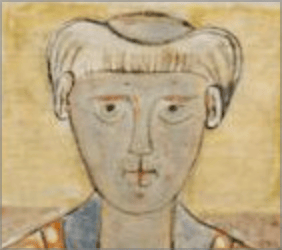
Paulus Diaconus was a Lombard historian, monk, and writer who lived during the 8th century. He was born in the Lombard Kingdom of Italy around 720 and died sometime after 799. Paulus is best known for his monumental work, Historia Langobardorum which is a key source for understanding the history of the Lombard people and their kingdom in Italy.
At a young age, Paulus entered the Benedictine monastery of Monte Cassino and under the guidance of abbot Ratchis, he studied Latin and Greek classics, biblical texts, and Church writings.
Paulus left Monte Cassino in the mid-770s and entered the service of the Lombard king, Desiderius. He served as a court scribe, tutor, and diplomat, which further expanded his understanding of politics and history. However, his career at the court was cut short when the Lombard kingdom fell to the Franks under Charlemagne in 774.
After the fall of the Lombard Kingdom, Paulus returned to the monastic life and joined the court of Charlemagne, where he became a member of the Carolingian Renaissance, a cultural and intellectual movement initiated by Charlemagne to promote learning and the arts. During this time, Paulus wrote numerous works, including, Historia Langobardorum, also an adaptation of Breviarium historiae Romanae by Eutropius, and a history of the bishops of Metz.