
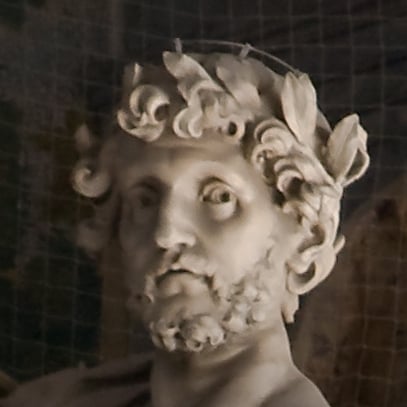
Charles the Great, also known as Charlemagne, was a medieval ruler who reigned as King of the Franks and Lombards and later became the first Holy Roman Emperor. Born in 742, Charlemagne was the eldest son of Pepin the Short and Bertrada of Laon.
Charlemagne came to power in 768 after the death of his father, Pepin the Short. He initially ruled jointly with his brother Carloman, but after Carloman's death in 771, Charlemagne became the sole ruler of the Frankish kingdom. He embarked on a series of military campaigns to expand his territory, conquering the Lombards in Italy, the Saxons in modern-day Germany, and the Avars in modern-day Austria and Hungary. By the end of his reign, Charlemagne's empire stretched from the Pyrenees in the west to the Elbe River in the east and from the North Sea to central Italy in the south.
In 800, Pope Leo III crowned Charlemagne as the first Holy Roman Emperor, a title that would continue to be held by various European rulers for over a millennium. This act established Charlemagne as the spiritual and political leader of Western Europe and symbolized the unity of the Roman Catholic Church and the secular power of the Frankish kingdom. It also marked the beginning of the Holy Roman Empire, which sought to revive the glory and prestige of the ancient Roman Empire.
Charlemagne was deeply involved in the administration of his empire and sought to create a more efficient and centralized government. He divided his realm into counties, each governed by a count who was responsible for maintaining order, collecting taxes, and administering justice. The king also sent out royal agents called missi dominici to oversee the activities of the local authorities and ensure that they carried out his orders. This system of governance helped to establish the basis for the feudal system that would dominate medieval Europe.
Charlemagne's death in 814 marked the end of the Carolingian Empire. It was divided among his three surviving sons, eventually leading to the fragmentation of the Carolingian Empire and the eventual disintegration of his realm.