
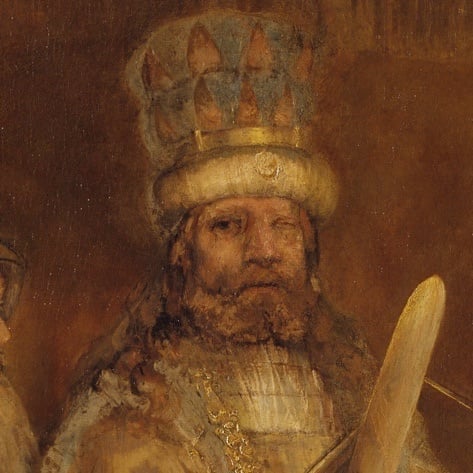
Iulius Civilis was a leader of the Batavian tribe, which settled in the Betuwe region of the Netherlands and initially lived in peace with the Romans. He served as a leader of Batavian auxiliary troops, and his brother Claudius Paulus and nephew Iulius Briganticus were also in Roman service. However, during the reign of Emperor Nero, Claudius Paulus was executed, and Civilis was brought to Rome in chains. He was later pardoned and reinstated as a cohort leader in Lower Germania by Emperor Galba.
During the four-emperor year, Civilis took advantage of the unrest in Italy to lead an uprising of Germanic tribes on the Rhine with the goal of creating an independent territory in the north of Western Europe. At first, Civilis intervened in the civil war on behalf of Vespasian, but later had to fight against Rome itself. Other Germanic tribes and Gallic tribes joined the revolt, and even some Roman legions assumed that Civilis supported Vespasian. Civilis' troops captured several Roman camps, but Vespasian gradually brought the lost territories back under control of the Empire.
Civilis surrendered in 70, and nothing is known about his further life.