
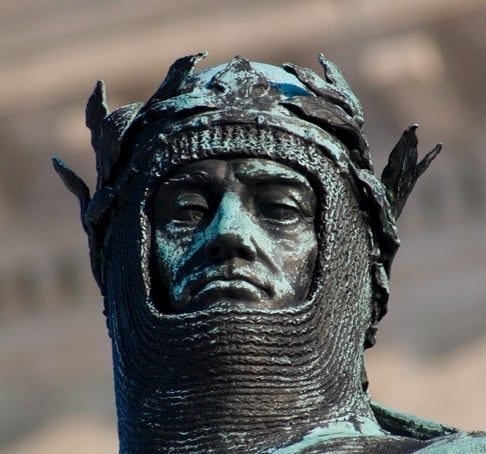
Otto I von Wittelsbach was the Duke of Bavaria from 1180 to 1183. He was the first member of the House of Wittelsbach to rule over the Duchy of Bavaria, marking the beginning of the Wittelsbach dynasty's long association with the region. His reign and the events leading to his ascension to power provide valuable insights into the political, social, and economic landscape of the Holy Roman Empire during the late 12th century.
Otto was born around 1117 to Count Palatine Otto IV of Wittelsbach and Heilika of Pettendorf-Lengenfeld. The Wittelsbach family was an influential noble house in the region that would later become Bavaria. Otto IV, his father, held various offices within the Holy Roman Empire, including the Count Palatine of Bavaria.
Otto's rise to power was closely linked to the political intrigues and conflicts of the Holy Roman Empire during the 12th century. The Duchy of Bavaria was ruled by the Welf dynasty, which was in a prolonged conflict with the Hohenstaufen emperors. The Welf Duke Henry the Lion, one of the most powerful princes in the empire, was accused of failing to support Emperor Frederick I Barbarossa in his Italian campaigns.
As tensions escalated, Emperor Frederick I moved against Henry the Lion, seeking to weaken his power and influence. In 1180, Henry the Lion was stripped of his duchies of Saxony and Bavaria by the imperial diet at Gelnhausen. This decision presented an opportunity for Otto, who had already established a strong rapport with Emperor Frederick I by supporting him in his campaigns and as an advisor.
In 1180, he was granted the title of Duke of Bavaria by Emperor Frederick I. Barbarossa. His appointment marked the end of Welf rule in Bavaria and the beginning of the Wittelsbach dynasty's nearly 700-year reign in the region. However, his rule as Duke of Bavaria was brief, lasting only three years. As the new ruler of Bavaria, he faced opposition from the deposed Henry the Lion and his supporters, who still held significant influence in the region.
Otto I von Wittelsbach died on November 11, 1183. Although his reign as Duke of Bavaria was short, his ascension marked the beginning of the Wittelsbach dynasty's long rule over the region, which lasted until the end of the Holy Roman Empire in 1806.