
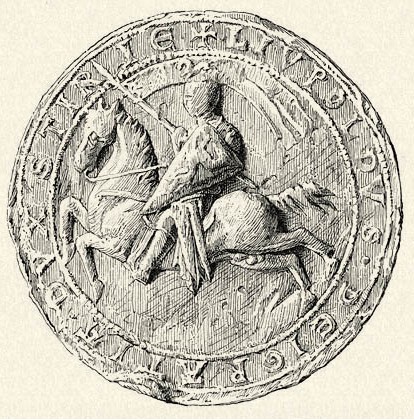
Leopold VI, also known as Leopold the Glorious, was the Duke of Austria and a member of the House of Babenberg. He ruled as Duke from 1198 until his death in 1230, and his reign was marked by territorial expansion, patronage of the arts, and efforts to strengthen the political and economic power of Austria.
Leopold was born in 1176 as the son of Duke Leopold V of Austria and his wife, Helena of Hungary. He ascended to the position of Duke of Austria after the death of his brother, Frederick I, in 1198.
As Duke, Leopold pursued a policy of territorial expansion and consolidation. He sought to strengthen Austria's borders and increase its influence within the Holy Roman Empire. One of his major accomplishments was the acquisition of Styria in 1192 through his marriage to Theodora Angelina, the daughter of Byzantine Emperor Isaac II Angelos. This marriage brought Styria under Austrian control and established a connection between the House of Babenberg and the Byzantine Empire, which further enhanced Austria's prestige.
He participated in the imperial election of 1198, supporting Philip of Swabia against Otto IV of Brunswick. Throughout his reign, he maintained a delicate balance between supporting the emperor and asserting the autonomy of his duchy.
Under his rule, Austria became a center of Minnesang, the German tradition of courtly love poetry. He supported the work of Walther von der Vogelweide, one of the most famous Minnesingers of the time, and other poets and musicians.
Leopold VI died in 1230 and was succeeded by his son, Frederick II.