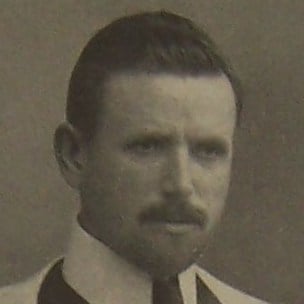
Hermann Hahn, a well-known German sculptor and medallist, was born in Kloster Veilsdorf in 1868. His artistic training began under court painter Rudolf Oppenheim in Rudolstadt, later transitioning to the Munich School of Arts and Crafts and the Munich Art Academy. From 1887 to 1892, he was a pupil of Wilhelm von Rümann.
Upon returning to Munich, Hahn established his residence and was appointed professor at the Munich Art Academy in 1902. In 1919, he was recognized as a foreign member of the Fine Arts of the Prussian Academy of Arts. In 1929, he participated in the Partial Art Exhibition at the Munich Glass Palace with his sculpture, "Höhenflug." Hahn was also a member of the Deutscher Künstlerbund and was awarded the Bavarian Order of Maximilian for Science and Art in 1913.
During the National Socialist era, Hahn was a member of the Reichskammer der Bildenden Künste and had his work displayed in five major German art exhibitions in Munich from 1937 to 1943.
Hahn was best known for his realistic portrait sculpture, a style he adhered to throughout his career. However, he was also profoundly influenced by the neoclassical works of Adolf von Hildebrand. Thanks to Hahn, Hildebrand's perspective was passed on to the next generation of sculptors and had a lasting influence on the education at the Munich Academy.