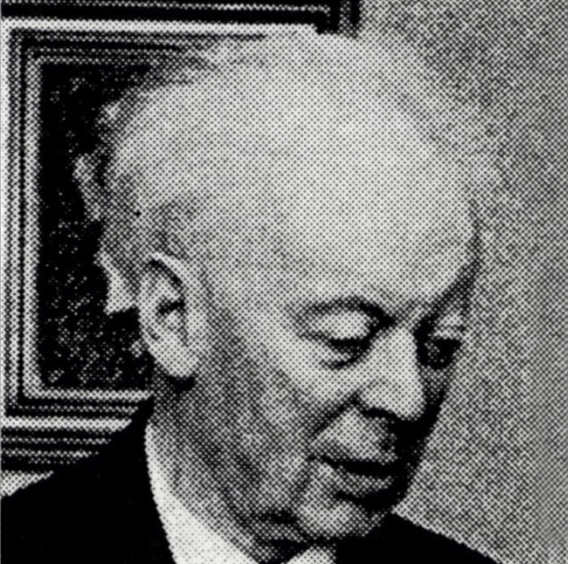
Theodor Georgii was a German sculptor born on December 30, 1883, in Würzburg. He grew up in a family of artists and was the son of the painter and art professor Friedrich Georgii. Georgii's father recognized his son's talent at an early age and encouraged him to pursue art.
Georgii began his artistic training in 1902 at the Academy of Fine Arts in Munich, where he studied under the sculptor Adolf von Hildebrand. During his studies, Georgii became interested in the art of ancient Greece and Rome and began to incorporate classical motifs into his work. In 1906, Georgii won the Rome Prize, which allowed him to travel to Rome and study classical sculpture.
After returning from Rome, Georgii established himself as a successful sculptor. He created numerous works for public spaces, including monuments, fountains, and sculptures for buildings. One of his most notable works is the statue of the Madonna and Child in the west facade of the Ulm Minster.
During World War I, Georgii served in the German army and was wounded in action. After the war, he continued to work as a sculptor and also began teaching at the Academy of Fine Arts in Munich.
In 1933, the Nazi Party came to power in Germany, and Georgii's work was deemed degenerate by the regime. He was forced to resign from his teaching position and was no longer able to exhibit his work publicly. Despite this, Georgii continued to work in his studio, creating sculptures and other works in secret.
After the war, Georgii resumed his teaching position at the Academy of Fine Arts in Munich and continued to create sculptures until his death in 1963. Today, his work is recognized as an important contribution to the art of the 20th century.