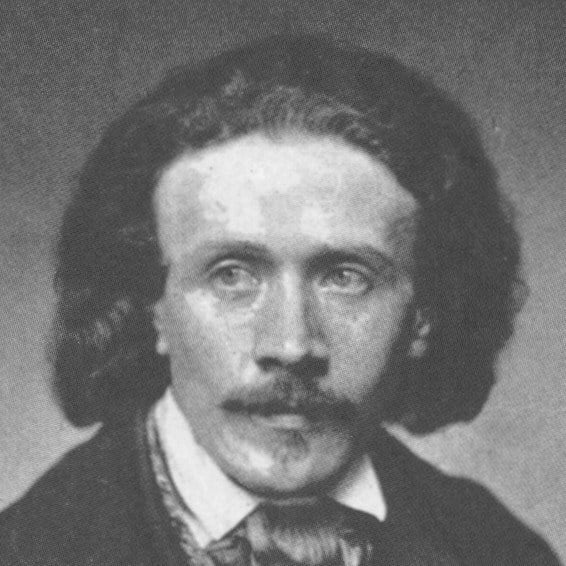
Konrad Knoll was a German sculptor born on September 9, 1829, in Bad Bergzabern, who studied under the sculptor priest Bernhard Würschmitt. He continued his education in Karlsruhe, Stuttgart, and Munich, where he attended the academy from 1848 to 1852 and trained with Halbig. Knoll's early works included a Tannhäuser shield and a Wolfram von Eschenbach statue in the form of a fountain for the poet's hometown. He also created a model of a statue of Sappho in 1860, which he later executed in marble for King Ludwig II of Bavaria.
In 1865, Knoll began work on the Munich Fish Fountain after creating the colossal statues of Henry the Lion and Ludwig the Bavarian at the Old City Hall in Munich. He also created the model for Johann Philipp Palm's monument in Braunau am Inn, which was cast in ore by Ferdinand von Miller. He sculpted a life-size group of St. Elisabeth, expelled from Wartburg Castle with her three children, and in 1868, Knoll modeled the colossal bust of the historian Ludwig Häusser for the cemetery in Heidelberg.
Later in his career, Knoll created a colossal bust of Ludwig van Beethoven, the monument to Melchior Meyr in Nördlingen, and a bust of the German emperor. He also created a limestone stele with inscription and bronze bust on a marble base for Christoph Willibald Gluck in Weidenwang, a district of Berching, in 1870. Knoll was also a professor at the Technical University in Munich.